
Trekking through Nepal

[This is a short except from an account in When the Stars Align about a trip I took in 1982; this portion concerns a two-week trekking experience in Nepal.]
Flying into Kathmandu, I could see the white-capped Himalayan peaks coming into view through the airplane windows. Kathmandu is the capital of Nepal, and displays a unique blend of cultural influences from both Asia and Europe, a sort of “Amsterdam of the East.” I came here to hike through the outlying foothills and mountains of the region, which I had fantasized about for years since seeing images of it in magazines while just a teenager.
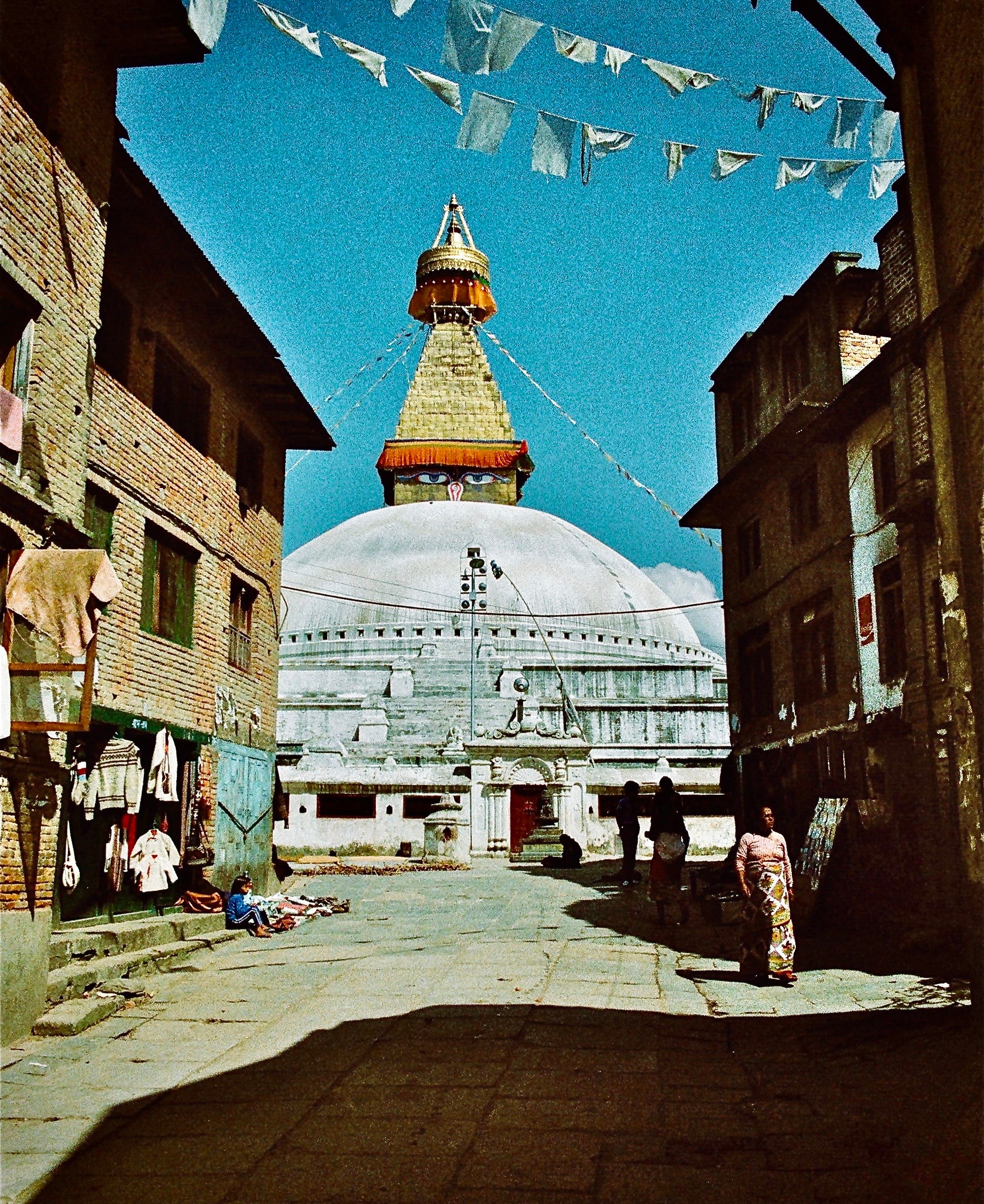
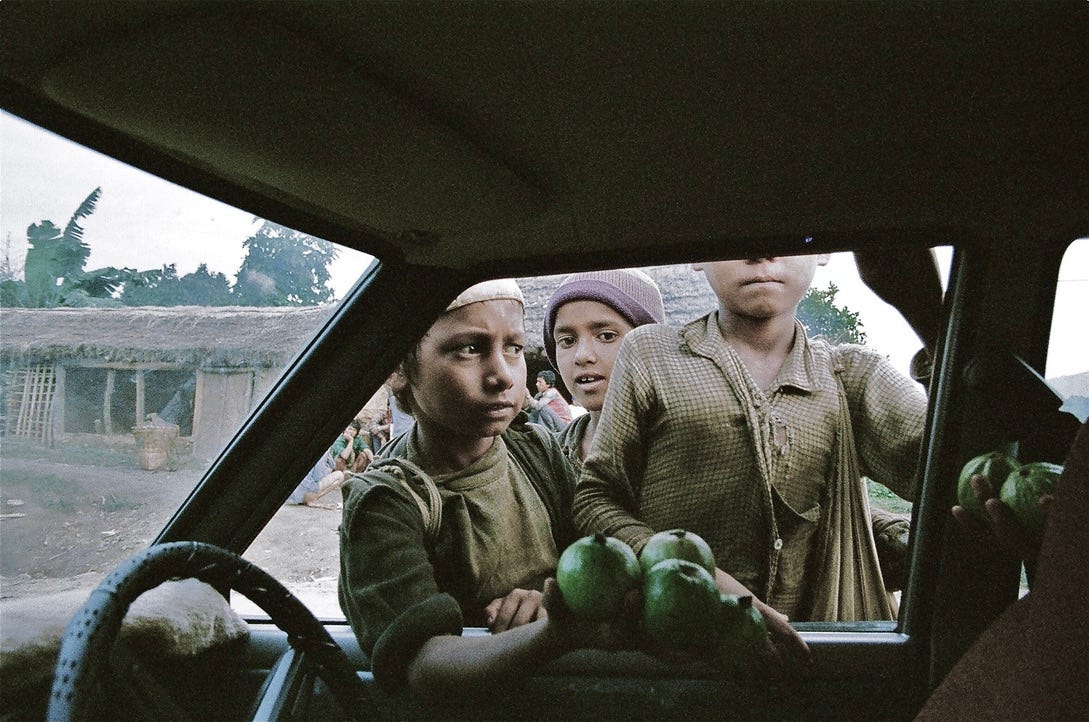
After exploring Kathmandu for several days and then procuring a trekking permit, I caught a bus and a taxi to the small town of Pokhara, from which some of the major hikes originated. At stops along the way, local children rushed up to the car and try to sell us vegetables or trinkets.
Having arrived at Pokhara, I decided to travel solo through the mountains rather than hire a Sherpa to carry my backpack, since I wanted to be alone with my thoughts along the way. I spent the next thirteen days making my way through the valleys and hills adjoining the Himalayas, in the region of the Annapurna mountain range.
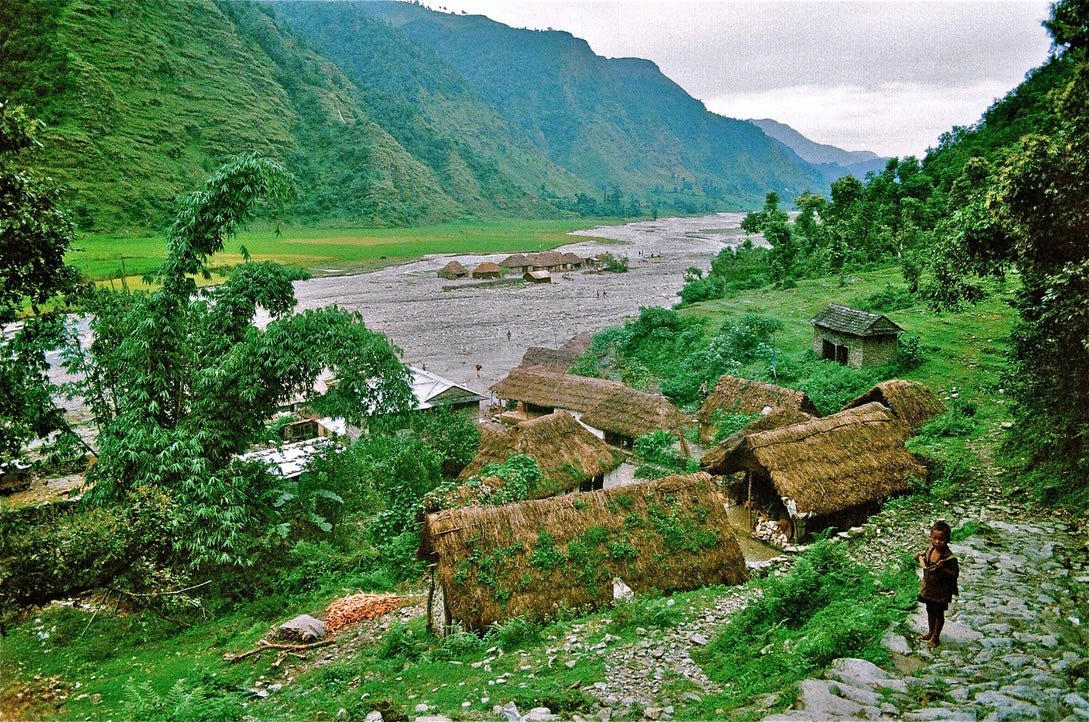
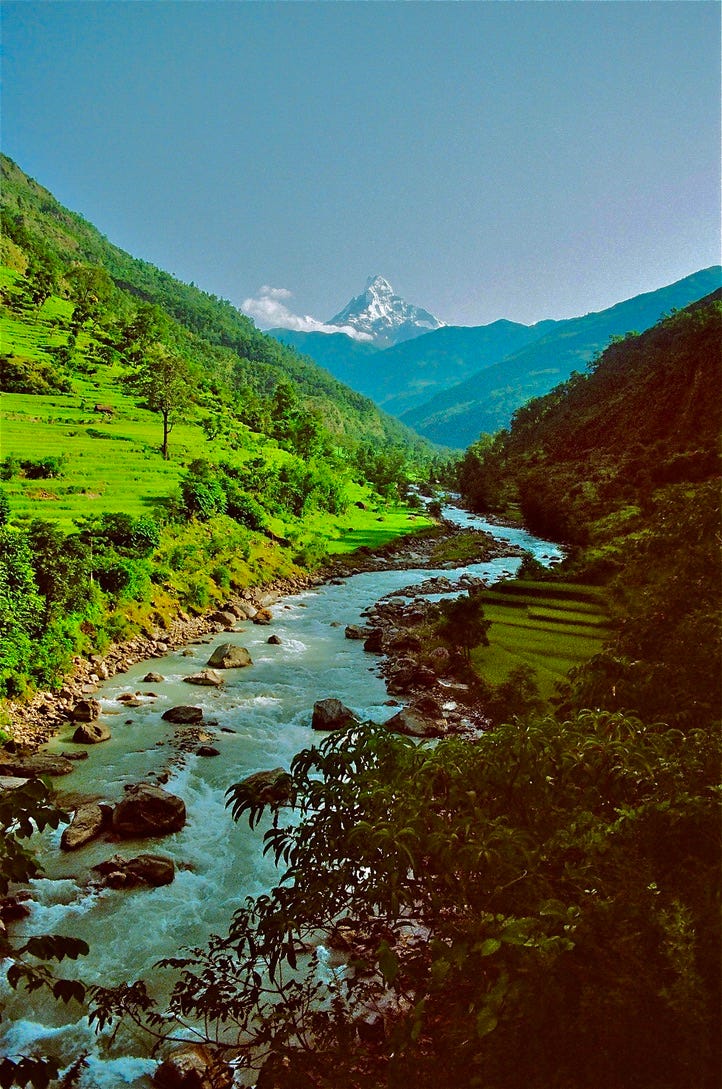
I was surprised to discover how much of the country consisted of green valleys and humid junglelike terrain rather than the rugged mountain ranges I’d seen in pictures. The hiking trails weave up and down through the green valleys and hills directly adjacent to the towering Himalayas, and the contrast between the two geographies was dramatic—the lush greenery set against the stark black and blue whiteness of the Annapurnas.
I was lucky coming here when I did, because on my first day of hiking, the sky cleared and the monsoon season abruptly came to an end. As I was hiking in on that first leg of the trail, I crossed paths with two Englishmen on their way out who had just finished a thirty-day trek and were lamenting how disappointed they were. Why? Because the region had been blanketed in heavy clouds throughout their entire trip—until this, their very last day of trekking. They hadn’t caught even a glimpse of the towering mountains until their trip was essentially over.
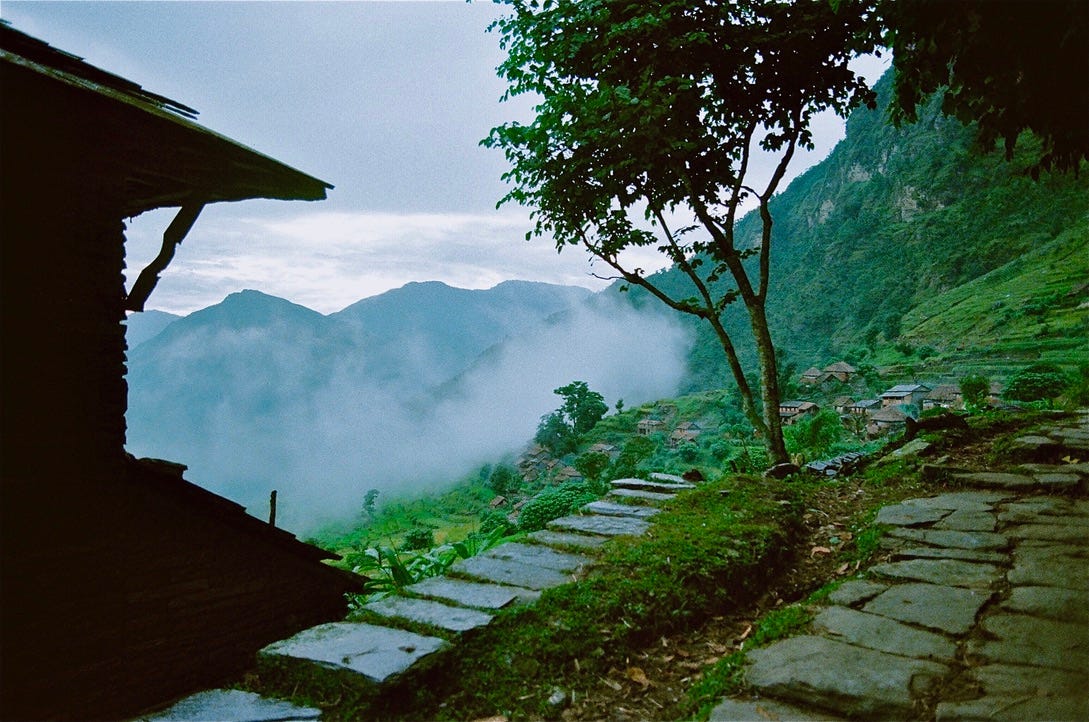
Each day I made my way up and down the narrow trails, sometimes over rocks and boulders, and at night I slept in one of the rustic huts situated along the pathways, where the locals rent out extra beds to travelers. The sights were breathtaking, from the terraced valleys and hidden waterfalls to the brilliant white snows of the Annapurnas. Sunrises and sunsets were spectacular. But the hiking was difficult: if one doesn’t schedule departure times in this region carefully, one runs the risk of hiking up the steep valley grades in direct sunlight, which makes for tortuous trekking in the heat and humidity.
At various stops along the way I engaged in conversations with other travelers. There was a Japanese climber who had previously been part of an expedition up Mt. Everest, which was beset by bad weather and killed nine of his fellow expedition members. Then there was the twenty-four-year-old German girl I met who at that age had already hitchhiked her way through South America, the U.S. (including Alaska), Canada, India, and Europe. I met more than a few like her on my trip, and it effectively absolved me of any illusions I might have regarding how adventurous my own trip really was. By their standards, my meager three-month journey seemed timid.
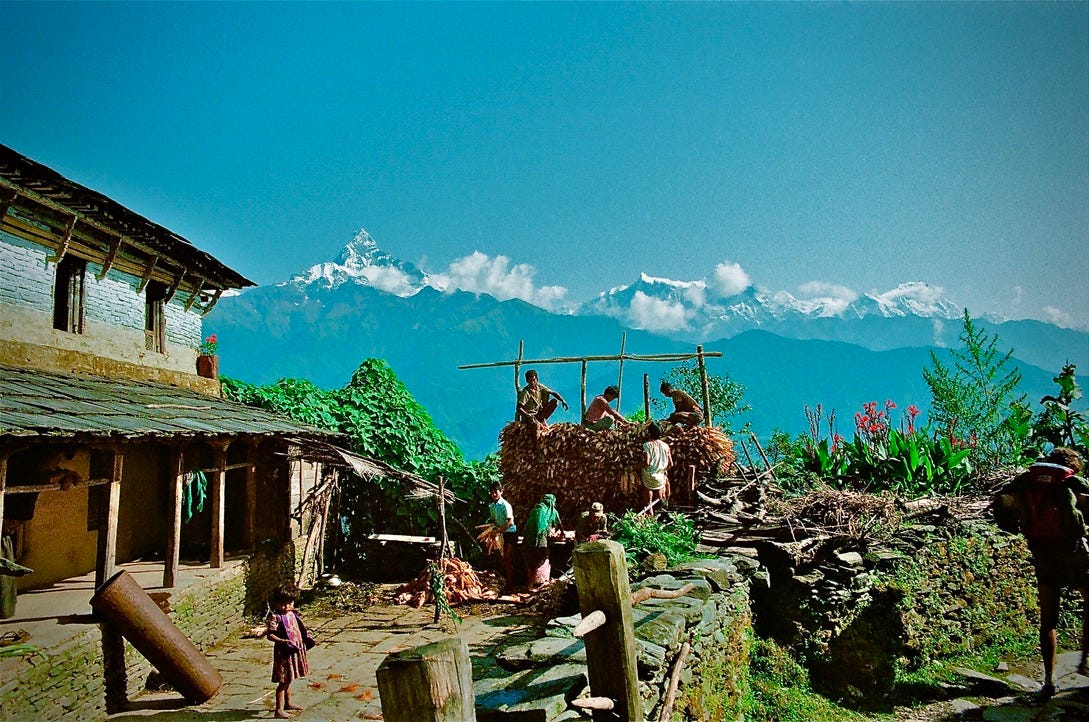
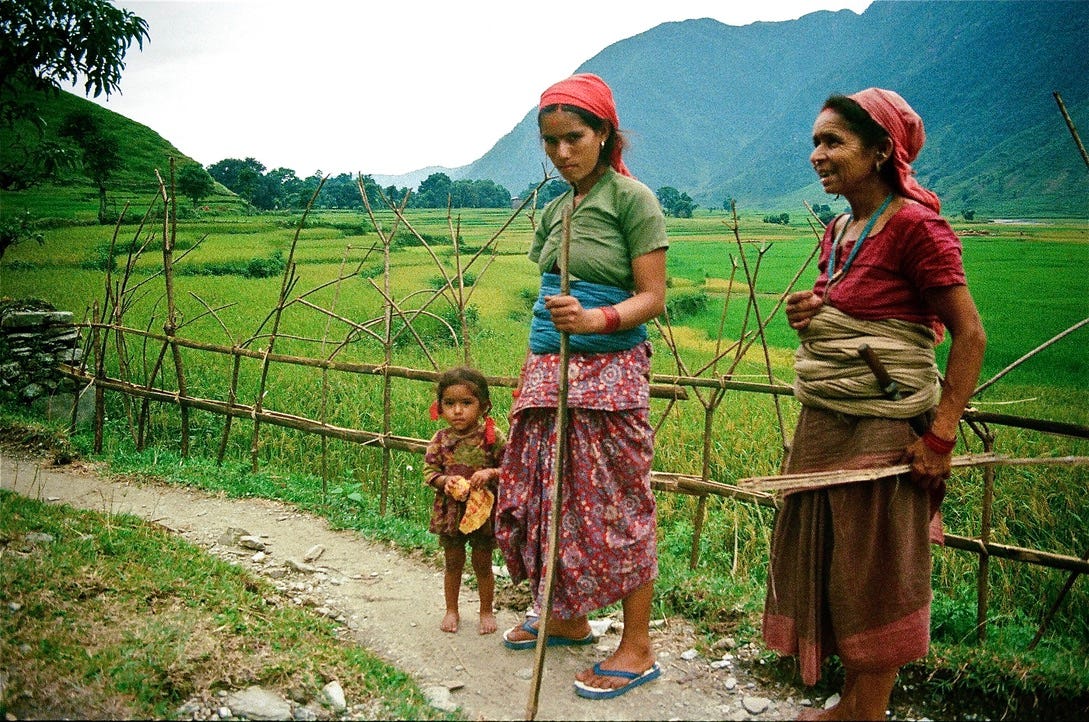
Then there were the local villagers, who were miserably poor and presented a sobering contrast to the comparatively wealthy Westerners hiking through their small hamlets. Some of the children were obviously sick, and a few were even disfigured from one disease or another. At one point an earnest young man told me they didn’t have doctors in most of these villages and asked if I would send a specific general aid medical text to him when I returned to America. I promised I would, and made good on that promise several months later.
On the last few days of my trek, I began to feel unusually weak. Then one morning, while sleeping in a village called Dhampus, I awoke with a sense of unease in my stomach that became severe. I felt an overpowering urge to relieve myself and dashed outside in a state of near panic, giving my bowels free rein behind some bushes. I felt ill and dizzy, and began to wonder how I was going to make it down out of the mountains.
I packed up my things and began stumbling down the path that led back to Pokhara. Two young Germans passed me on the way; their names were Rainer and Frederich, and they could clearly see from my staggered walk I wasn’t well. Rainer kindly offered to carry my pack by placing it atop his own, which was a huge help. But I grew dizzier as time went by, and we needed to stop frequently so I could catch my breath or run off into the bushes to relieve myself.
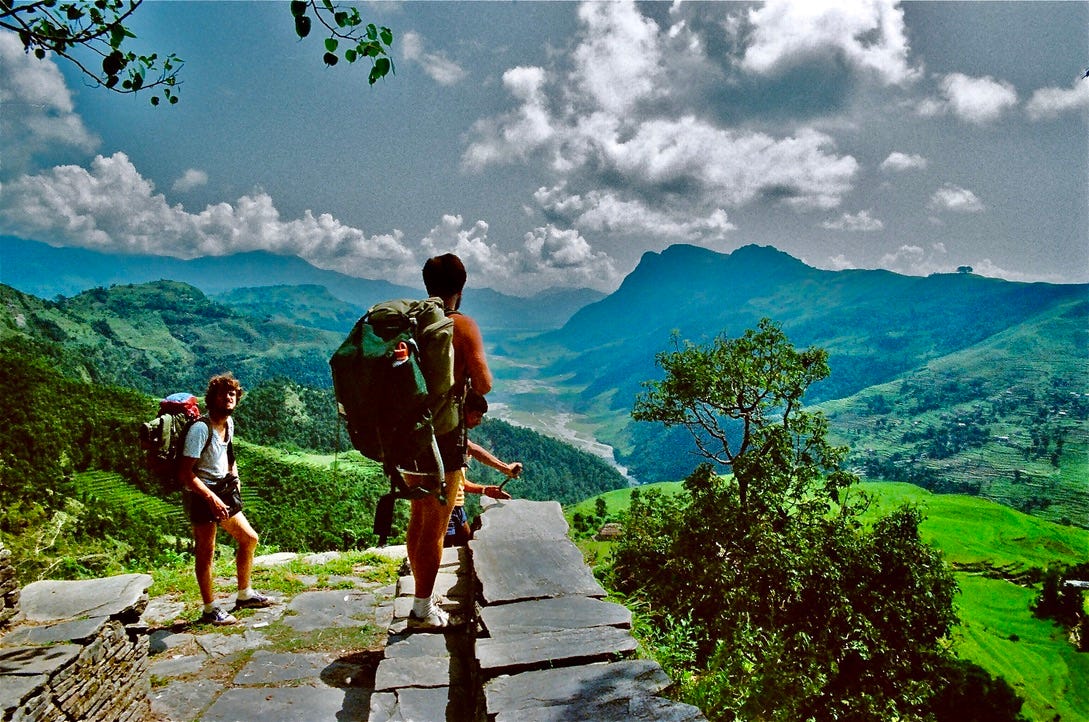
The two young Germans who helped me down out of the mountains, with Rainer (closest to the camera) carrying my backpack atop his own.
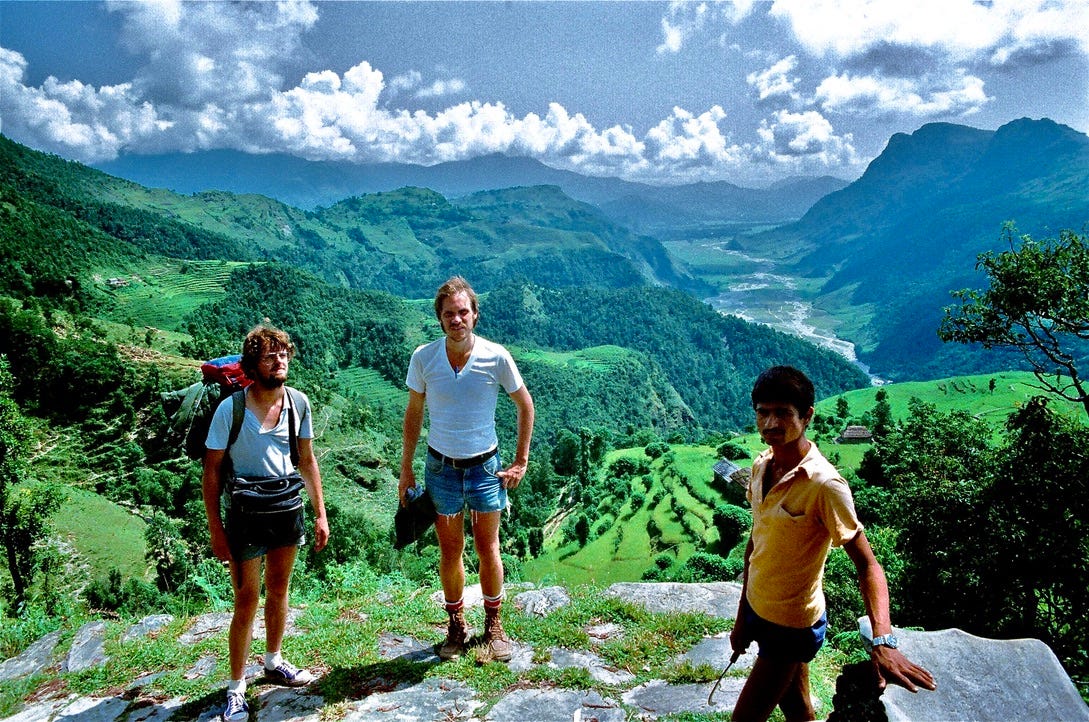
I’m in the middle between one of the Germans and a local.
To help take my mind off of my body, they engaged me in discussions about politics, travel, even philosophy. I happened to mention that I’d just starting working on a book about synchronicity and coincidence (which eventually became The Waking Dream). Rainer, the older of the two young men, said he was skeptical of the notion that coincidences might have any real significance. Yet after talking for a bit longer, he admitted to experiencing some strange things himself over the years. When I asked him for an example, he related the following astonishing story.
One day a colleague of his unexpectedly asked if he wanted to accompany him on a trip to America for a week’s stay in L.A. His friend’s girlfriend had suddenly backed out of a trip they had planned, and he figured he’d let someone else use the ticket to keep him company, so he asked Rainer.
The two of them flew to Los Angeles, where they stayed at the home of a colleague who had moved to the U.S. One afternoon, while Rainer was hanging out in this upscale house by himself, the doorbell rang. He went to the door and opened it to find one of his closest friends from back in Germany standing there. They stared at each other in shock. It turned out neither one of them knew the other was traveling to the United States; his friend also had an unexpected opportunity to travel to the U.S., also to Los Angeles, just like Rainer. While driving around the city one after- noon, that friend became lost and out of desperation decided to go up to a random house and ask for directions—only to discover his old friend Rainer answering the door. As they say, you can’t make this sort of thing up.
Rainer and Frederick helped me make my way back down to Pokhara, and from there I traveled back to Kathmandu. At a medical center in town, I had a cursory medical test, which proved inconclusive. The doctor told me I could obtain a more thorough diagnosis in Calcutta, back in India.
Once in Calcutta, I went to a hospital and waited along with hundreds of locals to receive attention. I won’t forget the sight there: a sea of faces all quietly awaiting help for their ailments or for their children’s ailments. I felt extremely uncomfortable being given preferential treatment by the doctors, who ushered me to the front of the line, visiting foreigner that I was, but I was simply too weak to negotiate or protest the point with anyone. The doctor there determined that I had giardia, a parasite that afflicts many campers and hikers, usually contracted from water that’s insufficiently boiled and loaded with bugs passed down through animal urine deposited upstream. He gave me some medicine in the form of black pellets that resembled rabbit droppings, but it didn’t help. The condition plagued me the rest of my trip, and for much of the following year.
I flew out from Calcutta to the Philippines to meet up with the group I’d be traveling to China with.
Ray Grasse is a writer, astrologer, and photographer living in the Chicagoland area.