
THE FORGOTTEN LANGUAGE
CHAPTER TWO OF "THE WAKING DREAM: UNLOCKING THE SYMBOLIC LANGUAGE OF OUR LIVES"

Following is from my book “The Waking Dream (Quest Books, 1996)
“It should be said at once that the completely profane world, the wholly desacralized cosmos, is a recent discovery in the history of the human spirit.” -—Mircea Eliade, The Sacred and the Profane
What follows is a brief look at the origins, growth, and eventual decline of the symbolist tradition, along with some of the ways it has expressed itself within various cultures and eras. Though not intended to be exhaustive, this overview will help provide a valuable perspective by which to evaluate its legacy for today.
ORIGINS
While it may be impossible to determine exactly when or where the symbolist worldview began, we can say it is exceedingly ancient, with roots in the earliest awakenings of religious thought. Whether inspired by encounters with lightning, the natural mysteries of death, or the infinity of the night sky, the religious urge was, at its most fundamental, an awakening to the symbolic dimension of reality and the depth aspect of ordinary experience. No longer a purely physical phenomena, reality was perceived as pointing beyond itself, as mediating a deeper, more mysterious ground of being. This primordial insight transformed the phenomena and events of everyday life into vehicles of meaning. As Mircea Eliade has said,
What we find as soon as we place ourselves in the perspective of the religious man of the archaic societies is that... the existence of the world “means” something, “wants to say” something, that the world is neither mute or opaque, that it is not an inert thing without purpose or significance. For religious man, the cosmos lives and speaks.[1]
From this awakening emerged a progressively more complex array of beliefs and practices. These ideas were at every stage shaped and informed by the prevailing mythic framework. Thus, what had probably begun for many societies as a vaguely defined set of beliefs and superstitions, through time, gave rise to an increasingly refined body of theory and ideas, in some cases even quasi-scientific systems of thought concerning the hidden workings of nature and everyday life.
For instance, employing a basic understanding of correspondences, a tribe or culture might link the cycles of the moon, death and resurrection, vegetation, rain, menstruation, femininity, snakes (who shed their skin as the moon changes phases), and the principles of time and change. This understanding of life’s affinities aided early humanity both in the interpretation of phenomena as well as in the practical, or “magical” manipulation of natural forces towards desired ends. This two-fold emphasis is sometimes described by modern writers as the distinction between “theoretical” and “practical” occultism. The foremost specialist in this knowledge in early societies was the shaman, who possessed the most refined understanding of hidden laws and their effects, and who was called upon in situations requiring interpretive insight or practical expertise.
But what began with the isolated shaman as an eclectic body of knowledge incorporating a broad grasp of many different areas, from reading omens and dreams to the magical employment of symbolic principles in rituals, became specialized, with the rise of higher civilizations, into many separate fields of knowledge, each with its own trained specialists and set of rules. Out of this splintering process arose highly complex disciplines in astrology, haruspicy (the reading of animal entrails), palmistry, dream interpretation, and the important skills of magic and healing (which for prescientific cultures were largely based upon deeply symbolic principles).
SYMBOLISM: PERSONAL, COLLECTIVE, AND UNIVERSAL
In most traditional societies, symbolist ideas were applied on three levels: personal, collective, and universal.
At the personal level, symbolist thought was applied to the circumstances and needs of specific individuals—the level we are largely concerned with in this book. Here, emphasis was on discerning personal fortunes through study of the omens or symbols of daily life, casting divinatory horoscopes for individuals (in early times, usually rulers of countries or other important officials), interpreting personal dreams, and similar concerns.
On the collective level, symbolist principles were applied to the subtle dynamics of entire societies or civilizations. Here, practitioners interpreted trends or developments in politics, the arts, sports, warfare, or Earth changes—all with an eye to understanding how each reflected changes of fortune in the life of the community. For example, a fire destroying the house of a prominent citizen might be read as an omen for the entire city; or an eclipse or other unusual celestial phenomena might be seen as portending a political crisis. Astrologers at this level cast horoscopes for the entire nation or for a mass event such as a battle, in the hope of fathoming the deeper patterns governing the collective destiny.
At the universal level, the symbolist perspective was directed toward understanding and deciphering nature’s patterns. Here, the universe in all its forms revealed itself as a great book encoding the truths of spiritual reality. Through a study of the symbolic meaning of the human body, the forms and processes of plant life, animal behavior, or the vast cycles of the seasons and the planets, the symbolist hoped to glimpse the workings of the Divine Mind. Practitioners of this approach ranged from classical thinkers like Pythagoras to more recent mystic-scientists like Kepler or Newton, for whom discoveries into nature’s laws held spiritual rather than strictly physical significance.
The important point here is that virtually every civilization in history actively subscribed to the essential tenets of the symbolist worldview, on one or more of these levels. And while most clearly apparent in an obsession with divination, superstition, and magic, such expressions reflected a more implicit, all-encompassing symbolic vision that extended to all aspects of experience, at varying levels of subtlety. Following, in broad outline, is an overview of some of the more distinctive expressions of symbolic thinking in ancient cultures.
MESOPOTAMIA
In ancient Mesopotamia, preoccupation with symbolic events and omens unfolded in a systematic way, leading to what some have even called the birth of the modern scientific method. Over hundreds of years, priestly chroniclers methodically cataloged thousands of unusual events of various types towards the end of establishing a body of data which could be used to interpret or predict future events.
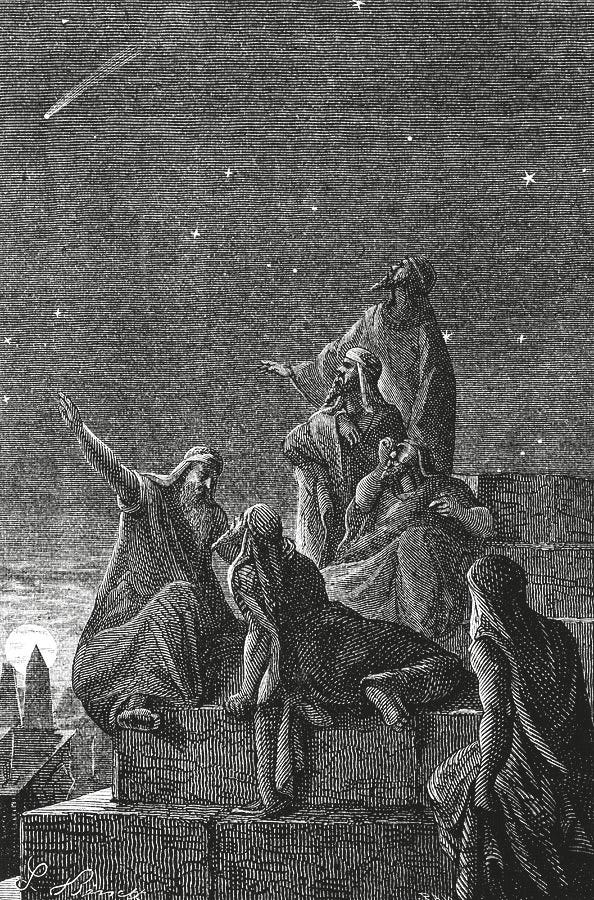
Importantly, this record was periodically updated or modified in keeping with changing observations, strongly suggesting this was not simply a rigid body of beliefs but a vitally evolving-and empirically based-system of thought. For example, if a three-legged calf or other malformed animal was born in a city and shortly afterward a disaster befell that city, this would be duly noted. If this same combination of events continued to occur over time, this would likewise be recorded, with a formal notation that any future appearances of this circumstance (or set of circumstances) could reasonably be considered an omen heralding a similar outcome.
Termed the “Babylonian Omen Series” by historians, the clay tablets recording these observations fall into several broad classes. On one set of tablets concerned with terrestrial (earthbound) omens called “If a city is set on a hill,” we find a concern with such events as the birth of monstrosities, the movements of animals, the significance of chance or overheard remarks and sounds, or the omens drawn from a person’s behavior during sleep, to name only a few. On another class of tablets focusing on omens and symbolic events of a celestial, or skyward nature, are detailed records of phenomena related to the appearances of planets, the Sun, the Moon, and meteorological events, with these primarily used to explain and predict developments within the society. It is in conjunction with this. latter, category of observations that many contemporary scholars believe Western astrology had its origins during the first and second millennia B.C.[3]
INDIA
In some respects the belief in life’s dreamlike character could be viewed as the cornerstone of India’s mystical, or yogic worldview. As W. Y. Evans-Wentz wrote,
“By a careful analytical study of dreams and psychological experimentation on himself as the subject, the yogin at last comes actually thus to realize, and not merely to believe, that the total content of the waking state as well as of the dream state is, in fact illusory phenomena.”[4]
This essential perception made possible the development of a far-reaching and vitally symbolist view of life, as expressed in a variety of sources. In India’s ancient mystical text the Artharva Veda, for example, a chapter is devoted to the interpretation of nightly dreams, while the immediately adjacent chapter is on the interpretation of waking omens or portents. In other words, what happens outside of us was seen as carrying the same symbolic weight as what happens inside us in dreams and could be interpreted within the same symbolic framework.[5] On a collective level, this sensibility gave rise to a keen sensitivity toward the occurrence of significant omens and symbols in society generally—an attentiveness that, as everywhere else, took on heightened importance during times of war and crisis. India’s great religious epic The Mahabharata, for instance, contains the following account of omens presaging the fortunes of the two great warring factions, the Kurus and the Pandavas:
Many horrible dreams are being seen by the Kurus, and many terrible signs and gruesome omens, predicting victory for the Pandavas. Meteors are falling from the sky, and there are hurricanes and earthquakes. The elephants are trumpeting, and horses are shedding tears and refusing food and water. Horses, elephants and men are eating little, yet they are shitting prodigiously; wise men say that is a sign of defeat. They say that, by contrast, the mounts of the Pandavas are quite happy and that wild animals are circling their camp to the right, a good sign, while all the wild animals are circling the Kurus’ camp to the left. Peacocks, wild geese, and cranes follow the Pandavas, while vultures, crows, kites, vampires, jackals, and swarms of mosquitoes follow the Kurus.
While the development of symbolist thought in India generally mirrored that found in other cultures (as for instance in its emphasis on astrology, magic, and omens), two systems of esoteric thought arose in Indian society that held a depth of sophistication and complexity unparalleled elsewhere in the world. These were the doctrines of karma (or spiritual cause-and-effect) and the chakras (or subtle psycho-spiritual centers of consciousness along the spine). Later chapters in this book will show how these doctrines contribute to the broader understanding of key facets of symbolist philosophy.
EGYPT
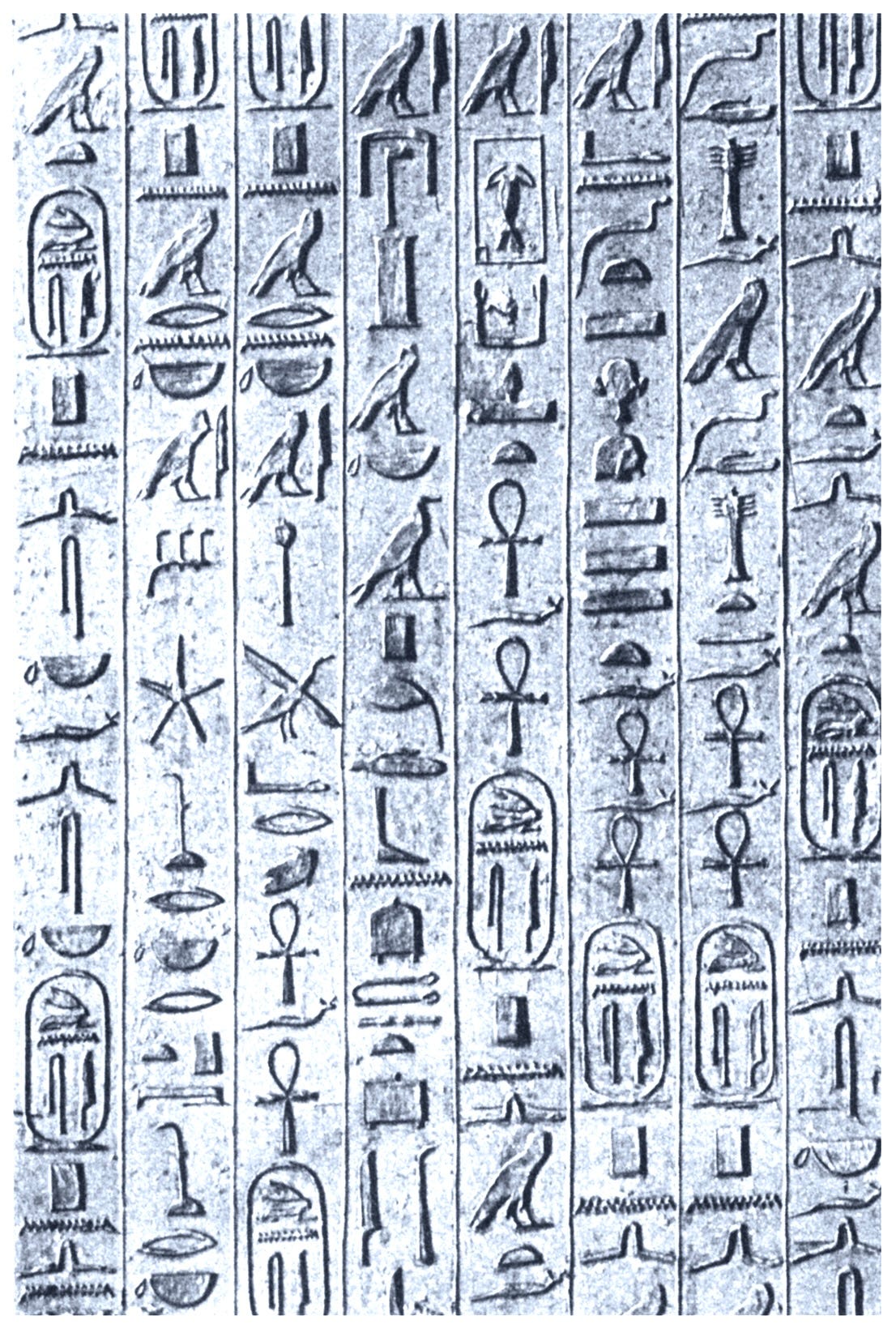
Arguably the most profoundly symbolist civilization in history, Egypt was regarded throughout much of the ancient Western world as the source of all philosophical and esoteric wisdom. For the Egyptians, the world was regarded as a repository of hieroglyphic messages, with all phenomena representing reflections of higher principles. This analogy with language is vital for understanding pharaohonic culture, since in ancient Egypt, language was invested with a deeply spiritual significance and was seen as nothing less than the key to reality itself.
Hieroglyphic images held several levels of inference at once: phonetic (in which an image or mark represents a particular sound), pictographic (in which an image directly depicts the phenomenon it represents), and symbolic (in which an image subtly infers multiple ideas and levels of meaning). In this way, a given word composed of hieroglyphs was able to convey various nuances of meaning simultaneously, a tendency most clearly reflected in the great Egyptian fondness for puns. This multileveled feature of language in turn reflected a multidimensional view of life itself, with all events or forms having the potential for interpretation on many different levels simultaneously.[6]
As writers like R. A. Schwaller de Lubicz, Robert Lawlor, and John Anthony West have argued, Egyptian society was based on a sophisticated foundation of sacred science, which informed the most diverse aspects of life, from architecture and the arts to the common system of weights and measures employed by merchants and engineers.[7]
CHINA
To the ancient Chinese mind, the world was the expression of a vast web of harmony, extending from the smallest blade of grass to the movements of the stars. This orderly conception of reality reflected a deeper play of universal principles, the interaction of which produced the varied forms of change governing all phenomena, both inwardly and outwardly.
Most fundamental of these principles were the essential polarities of yin and yang, the cosmic feminine and masculine, which gave birth to the phenomenal realm and its “ten thousand things.” Just as all images can be seen as the interplay of light and dark, so all experiences reflect varying degrees of balance between these two cosmic principles. The goal of the sage was to attain a proper balance of these qualities in all activities and thoughts.
All of China’s esoteric systems in one way or another reflected an alignment with this philosophical notion of polarity, as seen most dramatically in the great Chinese “Book of Changes,” the I Ching. This work describes the sixty-four archetypal patterns of existence, or “hexagrams,” which express the variations of relationship between yin and yang. Through the use of chance-based divinatory techniques, such as observing the patterns made by sticks cast on the ground, individuals were able to determine the underlying archetypal dynamics at work in any given circumstance, and thus understand the mode, of action which best served to establish harmony with the order of the universe itself
On the collective level, the Chinese conception of harmony was intimately associated with the role and person of the emperor. As in the case of the Egyptian pharaoh, the emperor was understood to be the mediator or conduit between Heaven and Earth, who acted as the harmonizing principle for the greater kingdom. Any omens or anomalous phenomena throughout the kingdom (whether earthbound or celestial) were carefully observed as potential warnings or expressions of the will of heaven relative to the emperor and his rule.
GREECE
In epic tales like the Iliad and the Odyssey, we find many examples of the symbolist view among the early Greeks. Homer’s description of bird omens at the palace of Menelaus when Helen has been restored after the victory at Troy, or Odysseus hearing thunder from a clear sky when he prays to Zeus for a sign on his return to Ithaca, to cite two examples, testify to the important role symbolist thought played in ancient Greek culture.
Yet even in the rational fifth century B.C. Athens of Pericles, the symbolist imagination continued to shape the Greek mind. Cicero tells us the Athenians called in manteis (interpreters of signs and symbols) for consultation in all important deliberations. The great importance accorded this knowledge by the Greeks is also reflected in the story (come down to us through Aeschylus) that among the arts brought from heaven by Prometheus was divination. This art was positioned midway in importance between medicine and mining. Through this gift humans could determine the obscure import of omens and voices, wayside signs, and the flights of taloned birds. Astrology also played a vital role in Greek society, where the now-common practice of “personal” (or genethlial) horoscope interpretation was pioneered.
Among the most important expressions of the symbolist tradition in Greek culture was the towering figure of Pythagoras. Part mystic and part scientist, he established a body of esoteric and mathematical ideas that influenced Western thinking for the next two thousand years. While little is known with certainty of his life or teachings, it is safe to say Pythagoras’s vision of the world was characterized by a perception of mathematical harmony. Like the Egyptians, from whom he likely drew much of his knowledge and inspiration, Pythagoras believed everything in the world—including our personal experience—was an expression of geometry and number, a concept which he illustrated by reference to the numerical properties embodied within musical harmonies. Reflecting the influence of Pythagoras, Plato later taught a similar doctrine stating that all manifest forms in our everyday world were reflections of divine principles (or “ideas”) upon subtler planes of experience.
ROME
A blend of Etruscan, Greek, Babylonian, and indigenous elements, the symbolist practices and beliefs of ancient Rome represented a pervasive—if sometimes obsessive— influence at all levels of its society. A priestly college of augurs (interpreters of signs and symbolic events) was officially consulted in all important matters of state or religious life.
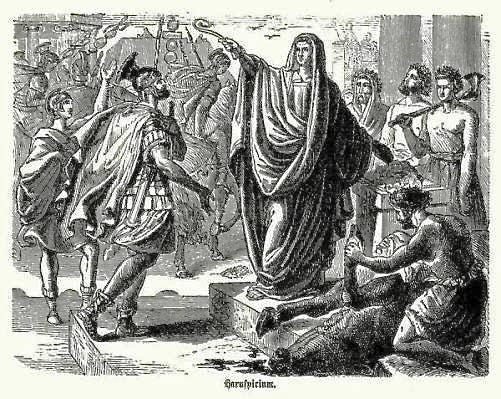
Writers like Cicero and Livy recorded many colorful examples of symbolist thinking in the lives of ancient Romans. One famous case involved the omens and portents recorded in conjunction with the Second Punic War. In the winter of 218 B.C., Romans were startled by the following extraordinary series of events: “In the Picenum, a rain of stones fell,” while “in Gaul, a wolf carried off the sword of a sentinel by pulling it out of its scabbard.” The following year at Falerii, “the sky split open as if torn, and from this opening a great light surged forth; the divinatory tables shrank spontaneously, and one, bearing the inscription ‘Mars shakes his lance’ fell.”
Through Suetonius we also learn of the dramatic omens said to have preceded the murder of Julius Caesar: horses Caesar had previously consecrated to the river Rubicon refused all water and wept copiously; the haruspex (oracle) Spurinna warned Caesar to beware the Ides of March; on the eve of the Ides, a wren carrying a laurel branch flew up toward the curia of Pompey (the Senate) where it was pursued by birds of every species; in the curia itself, the bird was torn to pieces; and finally, the night before the murder, Caesar dreamed he was flying above the clouds, sometimes shaking the hand of Jupiter, while his wife Calpurnia dreamed that the peak of the roof caved in and her husband was pierced through by the debris as he lay in her arms; then suddenly the door of the bedroom opened by itself.
Thus for the Romans, animal behavior, prophecies and omens, and dreams were all regarded as accurate predictors of events.
THE CHRISTIANIZED WEST
Though organized Christianity attempted to banish many of the pagan beliefs and practices associated with earlier traditions, many of these principles simply were pushed underground, or recast in specifically Christian form. On the universal level, for example, the traditional symbolist belief that the universe encoded divine truths was used by Christians in medieval times to examine nature for clues and signatures of biblical principles: The cycle of life, death, and regeneration in the plant kingdom was read as an allegory of the death and resurrection of Christ, while the descriptions of the varieties of animal life in books called bestiaries were read as encoding spiritual lessons for aspirants in their journey to salvation. This approach found support from St. Paul, who wrote: “The invisible things of Him from the creation of the world are clearly seen, being understood by the things that are made, even His eternal power and godhead” (Rom 1:20). On the collective level, historic events could similarly be viewed in terms of Christian beliefs: the great fire of London in 1666 was seen as a sign from God underscoring the religious shortcomings of its citizens, and the fall of Rome in 476 was interpreted by Augustine as a symbol of the preparation of a new Christian order across the world.
In contrast to the frequently simplistic character of medieval symbolist thinking, the intellectually rich environment of the Renaissance made possible a complex new wave of symbolist philosophizing. Precipitated in large part by the translation of ancient esoteric texts (believed at the time to derive from Egypt) by the Florentine scholar Marsilio Ficino, ancient hermetic/alchemical ideas eventually merged with Kabbalistic and esoteric Christian streams of thought to produce a unique new synthesis of occult themes which profoundly influenced European thought for centuries. Among the foremost figures in this “esoteric Renaissance” was the Italian metaphysician Cornelius Agrippa, whose encyclopedic de Occulta Philosophia synthesized many of the more prominent ideas and themes of this evolving tradition into one work.
This uniquely Christian approach to symbolist thought was brought to the colonies with the first settlers. In Puritan New England, events and accidents were often interpreted as personal messages from God: tragedies implied God’s disapproval or Job-like tests of piety, while success and good fortune implied divine approval or reward. Puritan minister Cotton Mather, an early American evangelist, kept what might today be called a “synchronistic diary,” carefully detailing all unusual or coincidental events with an eye toward their religious import. A snake appearing in church one Sunday might be interpreted as a lesson for the congregation about the temptations of the devil; a near-drowning or other serious accident would likewise have been read for the personal warning it conveyed from God.
THE ISLAMIC WORLD
As in Christianity, the Muslim tradition underwent considerable change in its attitude towards omens and divinatory practices. Beneath all the changes, however, lay an unchanging symbolist vision of reality, grounded in the teachings of the Prophet himself. The Koran declares: “Nothing is, that does not proclaim His praise.” The entire world was the expression of the Divine and could be read as its conscious handiwork. Indeed, complementing the written Koran was what Muslim sages saw as the “cosmic Koran”—the manifest world itself. Within every creature or phenom enon of nature were written the living letters and words of the great holy book. All things were recognized as “signs” (ayat), interpretable by the sage.[9]
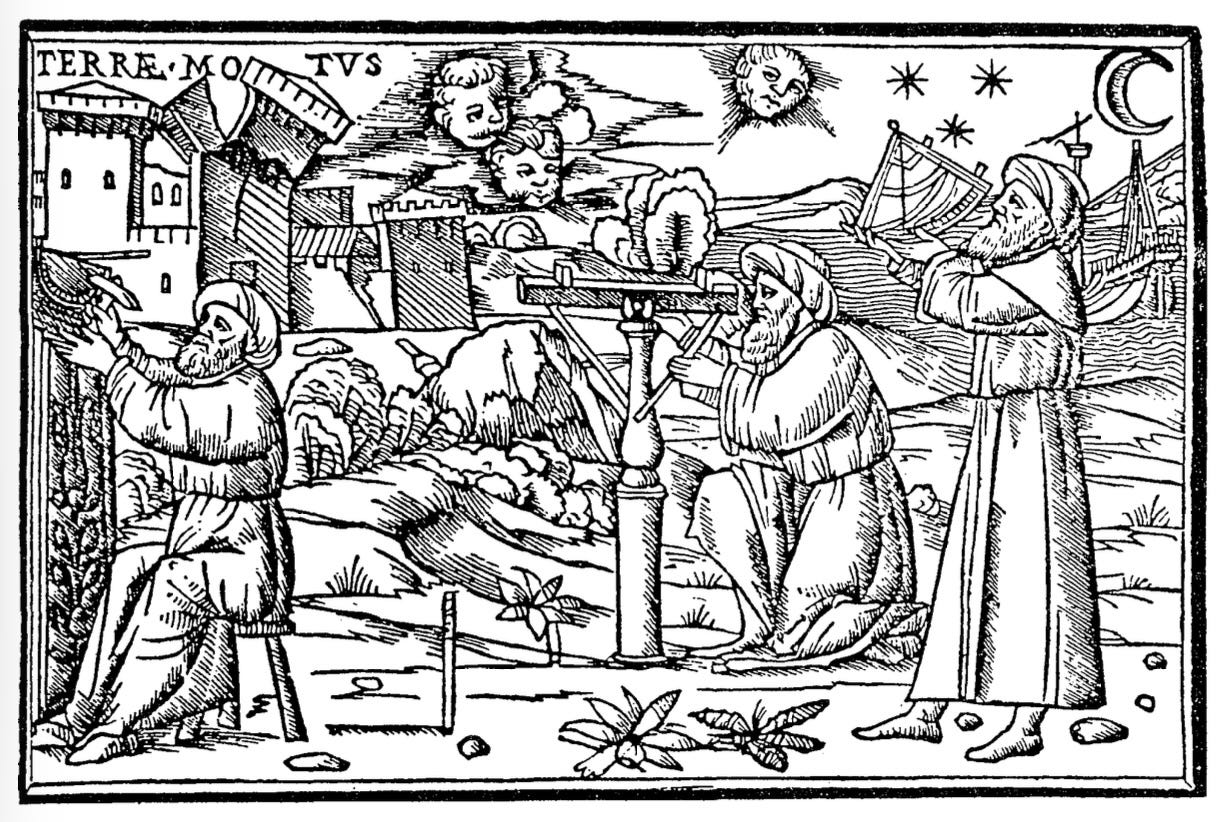
In this spirit, the great Muslim thinkers came to regard science as an essentially sacred activity, capable of revealing the divine qualities of existence. Through understanding the laws of nature, one could draw closer to realizing the presence of God in the world. As with the Mayans of Central America, this process of discovery revolved primarily around mathematics and astrology. In Cairo, Baghdad, Aleppo, and Mosul, the legacy of the ancient Greek astrologers was kept alive by Muslim thinkers until its eventual rediscovery by Europeans, an event which rekindled Western culture and served as a prime catalyst for the European Renaissance. Muslim astrologers regarded their discipline not merely as a method of prediction but as a tool for spiritual growth. Through astrology, as writer and teacher Anthony Aveni has noted, the Muslim “could discover his or her true cosmic dimension and know how this most lofty aspect of existence influenced daily life. Here was another way to achieve unity and order in the universe. [10]
THE JEWISH ESOTERIC TRADITION
While more conservative to all outward appearances in its attitude toward symbolist beliefs and practices, within Jewish culture an important body of esoteric thought developed that shared much with other great symbolist traditions. Known as the Kabbalah, Jewish esoteric thought included a doctrine of universal principles which underlie all existence, seen specifically in the twenty-two letters of the Hebrew alphabet and the ten sephiroth or energy principles of the Kabbalistic Tree of Life. Jewish esoteric thought also included a powerful—if considerably more discrete-science of magic and the occult, heavily influenced by Egyptian and Babylonian sources, as well as a decidedly providential or synchronistic view of everyday experience.
For instance, Kabbalist thought holds that individuals possess their own spiritual destiny, or tikun, and can learn to discern the hidden patterns and workings of the divine wisdom through a careful observation of events in ordinary life. In the teachings of Rabbi Luzzatto, for example, are stories in which individuals discover that behind the accidents or misfortunes in their lives are messages which hold a deeper meaning or blessing. Several generations later, this idea was likewise emphasized by the Hasidim for whom all unusual or odd turns of events were seen as highly meaningful and read on several levels.
By way of illustration, a story tells that the Hasidic founder Baal Shem Tov and his disciple were walking down a hot and dusty road one day. When the disciple complained of bitter thirst, the Baal Shem Tov asked him whether he believed in divine providence. When the disciple replied yes, a person suddenly appeared offering him a drink of water from a pail. When the Baal Shem Tov asked this person how he had come to be in such an out of the way spot, the man replied his master had just fainted nearby and he was compelled to bring water from a spring several miles distant. The Hasidic founder turned to his student and said, “You see, there are no coincidences in the universe.” [11]
THE AMERICAS
Despite the scarcity of written records among the tribes and civilizations of the new world, there is little doubt the symbolist view of life was pervasive in both North and South America. From the time of the earliest European explorers, observers have noted the extreme importance native inhabitants conferred on signs and messages in the environment, especially the movements of the heavenly bodies and the activities of animal life—with a special emphasis upon birds. Among the most famous (if tragic) examples of this general understanding can be seen in the great attention accorded the startling omens and portents witnessed by Montezuma and his priests immediately prior to the destruction of the Aztec empire by Cortez. Archaeologists have shown that the Mayan civilization possessed a school of augurs similar to those of ancient Rome. The Native American view of the meaningfulness of the environment is summarized in a passage by the contemporary native shaman Medicine Grizzlybear Lake, in his book Native Healer:
“The Creator can and does talk to you through anything if he or she so chooses, a rain cloud, a burning bush, a whirlwind, or a high mountain. He talks to our Native American medicine people the same way it has been from the beginning, for all races. He sometimes talks to us through dreams, visions, an eagle, hawk, raven, wolf, coyote, deer, buffalo, snake, rock, bear, lightning, and thunder.”
THE DECLINE AND FALL OF THE SYMBOLIST WORLDVIEW
After thousands of years, a profound change took place in humanity’s way of thinking about the world. Initiated in the scientific speculations of ancient Greece but reaching its fullest development in seventeenth-century Europe, allegiance began shifting from the older, symbolist perspective to a more secular and materialist way of perceiving reality. Though the underlying causes of this shift are complex, two elements stand out as critical: the emergence of scientific empiricism and the advent of printing and literacy.
Even before the birth of Christ, humanity had engaged in a form of rational scientific speculation regarding the nature of reality; yet in the seventeenth century such speculations were finally welded to the hard methodologies of experimentation and verifiability, giving rise to the modern scientific method. When Galileo looked through the telescope at Jupiter and its moons, he wanted to see beyond what everyone believed was there to what really was there; likewise, instead of blindly accepting the prevailing notion that heavier objects fell faster than lighter ones, he decided to test this out by ascending the tower of Pisa and dropping differently weighted objects to the ground. From this point forward, scientists undertook a process of verifying knowledge through increasingly rigorous forms of experimentation.
Over time, however, the success—and usefulness—of this approach gave rise to a tendency to view nature only in terms of what could be known through rational and quantifiable methods. This led eventually to a reductionistic philosophy in which anything that did not submit to standards of scientific verification was deemed not only unimportant but, perhaps, nonexistent. The world had become, in the eyes of the scientists, a great, soul-less machine, devoid of meaning, consciousness, and purpose, in which the hypothesis of God was (as Laplace remarked to Napoleon) no longer necessary. Along with the divestment of spirit and intelligence from nature departed any possibility for symbolic meaning in either nature or personal experience. In a dead world, surface phenomena could no longer be seen through toward a deeper ground of archetypal significance.
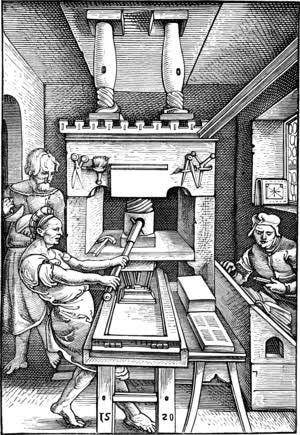
This change in the collective perception was reinforced by the rise of widespread printing and literacy. As writers like Marshall McLuhan have argued, our modality of language, whether written or oral, may itself be a significant factor in shaping our collective thinking and worldview.
For instance, whereas the symbolist mentality could be seen as involving a holistic, right-brained, and metaphoric cast of mind the printed word is conducive to a way of perceiving that is left-brained, analytic, and fragmentary. This is further underscored by Western styles of script which are decidedly non-symbolic or opaque in form, as compared with pictographic or hieroglyphic language systems like old Egyptian or traditional Chinese. These ancient languages, by merit of their visual-symbolic natures, engage more symbolic aspects of thinking. Through representing the world with a set of finite, closed notations, Western forms of writing, by contrast, have acted to seal off the innate transparencies of the world from poetic inference.
Additionally, by segmenting the world into verbs and nouns, actions and things, European languages predispose people to see certain phenomena as alive and others as dead—in stark contrast with the symbolist mentality which views all things as living processes and dynamic elements within a universe of flux. As the linguist Benjamin Whorf has pointed out, such languages as Hopi tend not to make such presumptions, depicting the world as a place of ongoing events and processes rather than of solid things. For such a culture, consequently, it would more fitting to say “the sky blues” or “bluing sky” than to say that “the sky is blue”—a phrase which has the effect of separating the quality of “blue” from the sky, while at the same time isolating the sky as a discrete object of thought.
It may be instructive here to recall a story related by nineteenth-century writer George Borrow. Borrow lived for a while among the gypsies in Europe and wrote about his experiences and observations in two books, Lavengro (Word Master) and Romany Rye (Gypsy Gentleman). Concerned by the almost one hundred percent illiteracy among the gypsies, Borrow tried to convince them of the value of learning how to read. They protested, saying if they did so, they would soon forget to read the stars and the weather, the marks of birds and animals and the cryptic symbols of warning or direction they scrawled on trees, stones, and fence posts, and they would soon forget to tell fortunes in palms, tea leaves, and crystals.
As literacy increased and people began to think scientifically, the symbolist view of reality increasingly disappeared from the collective psyche, surviving largely in vestigial form through folk superstitions or the modern popular fascination with newspaper horoscopes, fortune-tellers, and religious signs. Whatever meanings may be found in nature are now seen as projections of the human psyche rather than as inherent features of the world itself. Hence, what had once been a reality transparent to the presence of the archetypal and symbolic has now become opaque—a world divested of enchantment and closed to any deeper interpretation.[12] As Carl Jung said, as scientific understanding has grown, so our world has
…become dehumanized. Man feels himself isolated in the cosmos, because he is no longer involved in nature and has lost his emotional “unconscious identity” with natural phenomenon...Thunder is no longer the voice of an angry god, nor is lightning the avenging missile. No river contains á spirit, no tree is the principle of life in man, no snake contains the embodiment of wis-dom, no mountain cave is the home of a demon. No voices now speak to man from stones, plants or animals; nor does he speak to them believing they can hear. His contact with nature has gone, and with it has gone the profound emotional energy that this symbolic connection supplied. [13]
THE RE-EVALUATION
How then, shall we best assess the implications of this vast tradition of thought and its shifting place in history? Should we side with writers like Morris Berman who, in The Reenchantment of the World, argues that the traditional, enchanted worldview represented a more spiritual and participatory way of perceiving life, and its loss constitutes a lamentable step backwards in our collective evolution? Or shall we instead concur with writers like Ken Wilber, who eloquently argues in books like Up From Eden and Sex, Ecology, Spirituality that the ancient worldview was a decidedly less enlightened one, born of confused categories and primitive mythic-magical notions of reality? The emergence of rational/empirical thought in recent centuries, Wilber says, signifies an important step forward in our evolution toward spirit.
I propose that in a certain sense both perspectives are valid, the advent of modern rationalistic thought represents simultaneously a gain and a loss in our collective evolution. This point becomes clearer when we remember that the traditional symbolist worldview is not a single, homogeneous entity existing at all times and places at a consistent level of sophistication, but rather a multifaceted phenomenon with widely varying degrees of subtlety, ranging from the crudely irrational up to the profoundly subtle. For example, the way this worldview existed for the yogis of India or the priests of ancient Egypt cannot rightly be compared with how it expressed itself among the rural villages of medieval Europe, or within the stone age tribes of South America. Even in the context of individual cultures or communities we might reasonably expect to find vastly different levels of expertise in this knowledge among the members of society, as between the average individual and the resident shaman or priest. Even specific individuals can exhibit dramatically varying levels of sophistication in their symbolist ideas, as seen in the writings of Renaissance metaphysician Cornelius Agrippa.
In short, symbolist thinking has a great many facets, some more valid and important than others. Yet in most conventional discussions of the subject, these varied forms are lumped together as if they constitute a uniform body of thought, with no distinction between the layers of subtlety—a generalization akin to categorizing all religious experiences as being of equal value, thus equating the German mystic Meister Eckhart with evangelist Jimmy Swaggart, since both fall under the heading “Christian.” Predisposed by such loose generalizations, we can more easily dismiss the symbolist tradition in its entirety, assuming all its elements to be equally worthless.
Yet as we learn to become more sensitive to the distinctions which characterize this tradition, we begin to see that while humanity has indeed taken a collective step beyond the cruder levels of this worldview, it has done so at the expense of virtually all sensitivity to the subtler levels of symbolist thought. The challenge, therefore, is to review the many aspects of the symbolist view and determine which elements hold lasting value. Towards this end we might divide symbolist ideas into three categories describing their relative levels of sophistication: the superstitious, the religious, and the mystical.
(1) SUPERSTITIOUS (OR MAGICAL)
This term refers to all symbolist notions of the crudest and most primitive sort, in ancient or modern societies. At this level, events are viewed as meaningful or symbolic to the extent that they reflect the influence of hidden spirits or the workings of vaguely defined laws and forces. An accident might suggest the intervention of hidden beings working against one’s benefit, or simply the influence of ill fortune. Notions of correspondence and sympathy are generally of the most literal and simplistic sort, as when an individual employs the powder of a rhinoceros horn to enhance virility because of its obvious phallic shape, or eats walnuts to increase brain power because of the resemblance between walnuts and the folds of the brain. In short, there is at this level little sensitivity to the metaphoric elements involved in these associations. All beliefs and interpretations at this level are perceived in dualistic, black-or-white terms. A setback in one’s material fortunes is thus interpreted as bad luck, brought on by magical forces from an adversary or evil source, while finding a valuable object would be interpreted as good luck, indicating one’s destiny is now favored or that some form of positive magic is being directed on one’s behalf.
(2) RELIGIOUS (OR THEISTIC)
At the religious level, symbolic thought is in many respects similar to that expressed at the superstitious level, except with a theistic or divinely personified twist. Here, events are meaningful specifically to the extent they serve as vehicles of communication from an overseeing God (or in polytheism, gods). As with the superstitious level, all interpretations are viewed against a highly dualistic framework of good and bad, right and wrong, such that all seemingly negative or difficult developments are automatically read as indications of divine disapproval or tests of spiritual worthiness, while all seemingly positive or fortunate developments take on significance as signs of divine favor or approval. To this way of thinking, for example, AIDS can be construed as God’s punishment of promiscuous sinners, while victory in warfare is read as verifying God’s providence.
(3) MYSTICAL (OR ARCHETYPAL)
Symbolic interpretation that is mystical or archetypal differs notably from both previous levels. Here events are meaningful not because they refer to some hidden realm of mysterious beings or magical forces outside oneself, but because they ultimately reflect an inner field of consciousness with its own laws and principles of meaning. For this reason, mystical or archetypal interpretation is generally more psychological. In contrast with cruder forms of symbolist thought, at this level the sense of connection between the outer and inner is characterized not by confusion or an erroneous sense of participation mystique, in which external events hold personal significance simply because of a blurred or undeveloped perception of the relation between inner and outer. Rather, the archetypal symbolist sees the realm of outer events as holding inner significance because of a keenly developed sense of unity between these realms that simultaneously remains fully cognizant of the differentiation between the two. For the true primitive, by contrast, no such distinction exists, since an inner world, egoically, has not yet developed; for all intents and purposes, the outer world is the inner world, with no internal self-sense whatsoever. Or, to draw on an observation by Colin Wilson, Wordsworth in his nature poetry is “at one” with nature in a quite different sense from the hippopotamus dozing in the mud.[14]
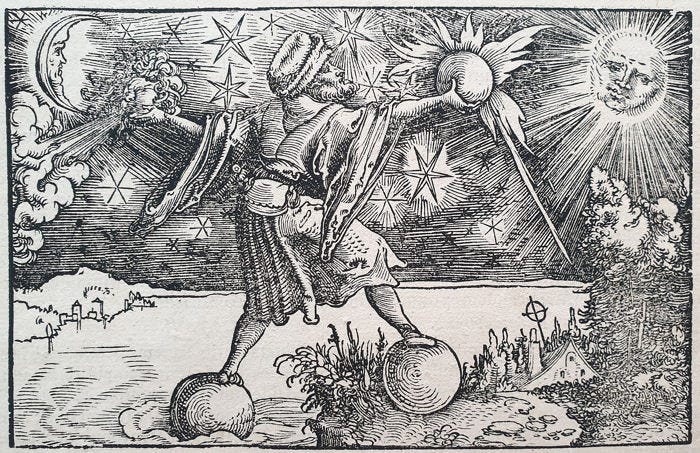
Paradoxically, the mystical perception shares a similarity with the superstitious level in one respect: both may invoke the operation of impersonal laws or hidden principles. Yet for the primitive, this characteristically involves a far more simplistic-and poorly defined-sense of occult mechanics, with a starkly literal version of correspondence and magical causality. Additionally, as opposed to the dualistic way of thinking found at both the superstitious and religious levels, the mystical level involves a genuinely open-ended sense of archetypal symbolism that transcends limited notions of good or bad, right or wrong, embracing instead a multivalency of meanings more in keeping with the true spirit of symbolism. What might be perceived as a tragedy or run of bad luck at the lower levels might be interpreted mystically as an expression of the archetype of transformation or rebirth in one’s life, without moralistic connotations attached, or winning a contest be viewed as an activation of the archetype of expansion, without connotations of good or bad luck. For this reason, both the superstitious and religious levels may be more accurately classified as belonging to the category of sign rather than symbol—the notion of sign denoting a narrow, one-to-one relationship (as seen in a company logo or trademark, in which the image denotes a specific and singular reference of meaning); symbol implying many levels of possible inference.
No less important than the content of the ideas expressed at these different levels of belief, however, is the manner in which they are held. For the religious or superstitious thinker, beliefs are accepted uncritically and anecdotally from the larger culture without any thought of personal verification (black cats are bad omens not because I have actually tested this out, but because it has always been said to be true). At the mystical level, on the other hand, beliefs are either derived from direct observation and introspection, or drawn from traditional sources but validated by personal testing and experimentation, in other words, a decidedly more scientific form of symbolist attitude. Additionally, at the less developed levels of thought, beliefs are frequently held in a spirit of obsessive dependency or fearfulness, as when an individual is unable to act without first learning what the omens say or believes the answers lie in the symbols outside. The mystic, by contrast, is neither dependent upon nor controlled by external symbols and signs but simply uses them as aids to inner resources of intuition and knowledge.
A simple illustration here may help convey the distinctions between the three levels. Imagine a person driving down the road when the car engine suddenly malfunctions and bursts into flame. Such an event would be interpreted in entirely different ways from each of the three levels of symbolic thought. For the superstitionist, the burning of the car’s engine could be read as the work of unseen evil spirits, or bad magic directed by enemies, or simply as an expression of decidedly bad luck. For the religionist, the same failure of the car might be seen as holding significance within a specifically theistic framework—i.e. the event was meant either to indicate divine punishment for some transgression on the part of the driver, or to convey a message from God about something needing to be learned from this situation. Perhaps the driver was destined to preach the gospel to the auto-repair person appearing on the scene, or simply to learn something about the nature of patience.
To the symbolist, however, the same event may not even possess any clear-cut single meaning, but instead connect to a larger gestalt of symbolic patterns unfolding in life. Value judgements of good or bad are rejected in favor of archetypal subtleties of interpretation. For example, instead of seeing the engine fire as an expression of “bad luck,” the driver might reflect on the subtle ways it connects to other developments taking place in his or her life. For instance, the engine might be seen as a symbol corresponding to the driving force or power in terms of physical health or career. The malfunction in the engine could therefore reflect a broader heating up or fieriness occurring in these areas as well. The underlying causes of this event are in turn understood not in terms of hidden spirits or some mechanism of luck but more commonly in terms of an impersonal (though spiritually grounded) law, such as described in the yogic doctrine of karma or the classical principle of telos (or purpose). All that occurs is orderly, with each event reflecting this all-embracing order.
Most important, the engine fire is at this level seen as symbolic not in terms of pointing toward some reference point or hidden meaning outside the driver’s own experience, but in the sense of reflecting an inner state of consciousness. Hence, to understand this event the driver might need to reflect upon what thoughts were passing through his or her mind at the moment the engine went out or even during the broader course of that day. Were they likewise volatile or fiery? Nor does this awareness of the deeper dimension of meaning blind someone to the purely practical dimension of the event, that is, while at one level the engine may be an archetypal symbol, on a more down-to-earth level, the engine on fire is simply an engine on fire and needs to be doused as rapidly as possible!
Looking back, it is clear that the symbolist mentality has expressed itself through the ages mainly as superstitious or religious thinking, in other words, almost entirely at the crudest and most simplistic levels. Yet this fact should not prevent us from recognizing the possibility of subtler levels of insight which this tradition stands to offer. In the words of Mircea Eliade, “Symbolic thinking is not the exclusive privilege of the child, of the poet or of the unbalanced mind; it is consubstantial with human existence, it comes before language and discursive reason.”[15] Or, as Herman Melville expressed this perception in his description of Starbuck, the first mate, in Moby Dick:
Uncommonly conscientious for a seaman, and endued with a deep natural reverence, the wild watery loneliness of his life did therefore incline him to superstitions; but to that sort of superstition, which in some organizations seem rather to spring, somehow, from intelligence than from ignorance. Outward portents and inward presentiments were his. (Chapter 26)
With these thoughts in mind, let us continue the exploration of symbolist thought with a look at a further system of classification of meanings contained in the living book of symbols.
Notes
1. Mircea Eliade, The Sacred and the Profane: The Nature of Religion (New York: Harper and Row, 1961), 165:
2. Another way of understanding the historical context of symbolist thought is in terms of the distinction between mysticism and occultism. Strictly speaking, mysticism represents the path of direct union with God. By contrast, occultism is the effort to understand creation and its inner workings, with an eye toward the practical application of that knowledge. One way to illustrate the distinction between these two paths is as follows: If reality were a skyscraper, with the different floors representing various levels from gross to subtle, then the mystic is the individual whose sole concern is finding the elevator and riding directly to the uppermost floors. The occultist, by contrast, is interested in finding out what is on each of the floors, and might therefore study the architectural, plumbing, and electrical diagrams of the building to understand the layout and energy-grid patterns characterizing its operations. According to this basic distinction, symbolist philosophy theoretically falls under the heading of occultism rather than mysticism, its focus being understanding how the cosmos operates, rather than its ultimate transcendence or integration. In reality, of course, one rarely finds either of these paths in their pure and unadulterated state, with many mystics through history possessing considerable occult knowledge, and many occultists having a deep mystical sensitivity. In mythological imagery, the ideal merging of these dual paths càn be seen in the Arthurian figure of Merlin, who embodies both spiritual insight and mystical knowledge.
3. O.R. Gurney, “The Babylonians and Hittites,” from Oracles and Divination. Michael Loewe and Carmen Blacker, eds. (Boulder, CO: Shambhala, 1981), 142-173.
4. W. Y. Evans-Wentz, Tibetan Yoga and Secret Doctrines (London: Oxford University Press, 1967), 165.
5. Cited by Wendy Doniger in Dreams, Illusions, and Other Realities (Chicago: University of Chicago Press, 1984), 18.
6. For an in-depth discussion of the multileveled character of Egyptian hieroglyphics, see Serge Sauneron’s The Priests of Ancient Egypt (New York: Evergreen Profile Books, Grove Press, 1960), 132-135.
7. A summation of both Schwaller de Lubicz and John Anthony West’s ideas can be found in West’s Serpent in the Sky: The High Wisdom of Ancient Egypt (Wheaton: Quest Books, 1993).
8. Paraphrased from Mythologies, vol. I, compiled by Yves Bonnefoy, translated by Gerald Honigsblum, under the direction of Wendy Doniger (Chicago: University of Chicago Press, 1991), 591.
9. Seyyed Hossein Nasr, The Need for a Sacred Science (Albany: SUNY Press, 1993),100, 132-133.
10. Cited by Anthony Aveni in Conversing with the Planets (New York: Kodansha International, Inc.,1994), 170-171.
11. Edward Hoffman, The Heavenly Ladder: A Jewish Guide to Inner Growth (San Fran-cisco: Harper & Row, 1985), 98-99.
12. It would be an exaggeration to suggest that the symbolist perspective ever completely disappeared. Apart from its vestigial survival through popular superstition, it is possible as well to trace a variety of historical streams through which its more subtle expressions have come down to us. In the philosophical world, a short list of its most influential proponents would include Emmanuel Swedenborg, Ralph Waldo Emerson, H. P. Blavatsky, Manly Palmer Hall, and Carl Jung. As it concerns the level of cosmic, or nature symbolism, we must also note the historical role played by European Romanticism in general, and the Naturphilosophie movement in particular, as represented by Novalis, Goethe, Schelling, H. Steffens, and G. H. von Schubert. In the literary field, seminal influences include Herman Melville, James Joyce, August Strindberg (Inferno, Occult Diary), Thornton Wilder (The Bridge at San Luis Rey), and the movement of symbolist art and poetry as epitomized by the French poet Baudelaire. Heavily influenced by both Swedenborg and the earlier American symbolists such as Emerson and Poe, Baudelaire’s poem “Correspondences” arguably represents the centerpiece of nineteenth-century literary symbolism: “Nature is a temple whose living columns sometimes yield confusing messages; man passes there across a forest of symbols which cast their familiar glances at him.” Finally, on the popular level, perhaps the most influential channel through which symbolist notions have persisted into modern times has been the divinatory arts, including such disciplines as astrology, tarot and the I Ching.
13. Carl Jung, “The Symbolic Life” in Collected Works, vol. 18 (Princeton: Princeton University Press, 1980), 255.
14. Colin Wilson, The Occult (New York: Random House, 1971), 46.
15. Mircea Eliade, Images and Symbols: Studies in Comparative Symbolism (New York: Search Book), 12.
Brilliant exposition..enchanting.
Excellent analysis, especially if you acknowledge that the Age of Aquarius arrived in the 15th century, which, according to historians, is the end of the Dark Ages and the beginning of the modern world... and the loss of focus upon symbolism. You introduced the arrival of the Age of Aquarius accurately. The great battle of the Age of Aquarius is its upending of the influence of the Pisces age overflow (including symbolism). It will take an age for Aquarius to push aside the dominant Pisces paradigms. Until around 3580 AD, Pisces is the dominant sign, and Aquarius is the strongest emergent sign. Around 3580, Aquarius will become the dominant sign, and the newly emergent Capricorn age will be fighting to overthrow Aquarius, which will take it over 2,100 years. The main reason people have trouble recognising the Age of Aquarius is that the dominant sign in the Age of Aquarius is Pisces. Pisces promotes illusion, delusion, lack of accuracy and definition. In the 26,000 years cycle of ages, we live in the period where we accept (Aquarian) rational explanations or fall back on dogma, delusions and fantasy mixed with any one of an almost countless number of religious influences based on faith (ie lack of evidence).
www.macro-astrology.com