
THE DIVINE SCALE
Searching for a Skeleton Key to the Universal Mind

[This is an excerpt from my book So, What Am I Doing Here, Anyway?, The Wessex Astrologer, 2024.]
While I was still a student in college, I had the chance to talk with a visiting scientist from a nearby college. During our conversation, I asked what drew him to science in the first place, as opposed to, say, becoming a shoe salesman, actor, or race car driver. He was surprisingly open about his religious motivations. “This may sound a bit grandiose,” he said, “but I was attracted to the possibility of uncovering the secrets of the universe.”
And just what did he mean by that?
“Well, I thought that if I could understand the laws of nature,” he continued, “I might be able to understand something deeper about existence itself. I’ve always felt as though scientific truths held a key to something more important. Spiritual truths, maybe.”
Grandiose or not, his answer wasn’t really all that unusual, at least not from the standpoint of the history of science. Figures like Kepler, Galileo and Isaac Newton all pursued their quests not simply out of curiosity about nature’s mechanical workings but from a conviction that those laws offered clues to the spiritual dimensions of life itself—possibly even the mind of God. As Galileo famously wrote in The Assayer (1623):
Philosophy is written in that great book which ever lies before our eyes—I mean the universe—but we cannot understand it if we do not first learn the language and grasp the symbols in which it is written. The book is written in mathematical language, and the symbols are triangles, circles and other geometrical figures, without whose help it is impossible to comprehend a single word of it; without which one wanders in vain through a dark labyrinth.
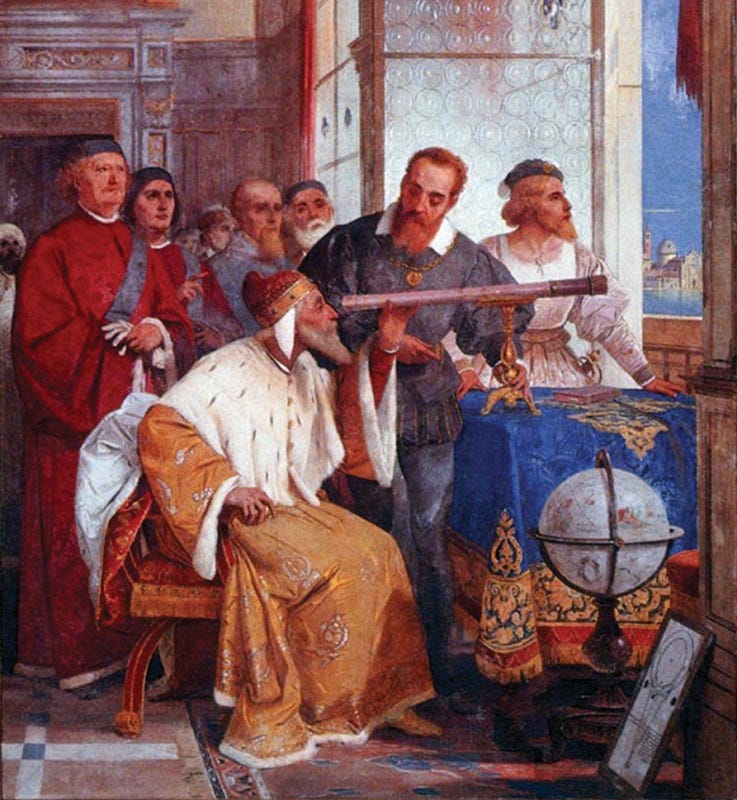
Galileo showing the Doge of Venice how to use the telescope (fresco by Giuseppe Bertini, 1858)
Even more pointedly, Isaac Newton wrote in a letter to Richard Bently:
When I wrote my treatise about our system, I had an eye upon such principles as might work with considering men for the belief of a Deity; and nothing can rejoice me more than to find it useful for that purpose. [1]
For scientific pioneers like these, nature was but the visible garment covering a deeper reality, and the key to unlocking its varied patterns was that of symbolism and analogy. In fact, this is a way of thinking about the world that has its roots in an intellectual tradition probably as old as civilization itself, with hints at least as far back as Pythagoras, if not much earlier. According to this perspective, for instance, light is not simply a physical phenomenon but a symbol for something divine; mathematical principles aren’t simply lifeless laws but mirrors of patterns in God’s mind; water isn’t merely a physical substance but the distillation of a higher state of being—and on it goes.
In reality, this philosophical perspective never completely disappeared, and we continue to see it rear up. In a Twitter comment posted in 2021, physicist Michio Kaku wrote,
The search for the God Equation is one of the greatest quests in all of science, the search for a single equation, perhaps no more than 1 inch long, that will unify all the laws of the universe, and allow us to ‘read the Mind of God,’ in the words of Einstein. [2]
Kaku has said on occasions he personally believes the key equation in that quest will be found in “string theory,” a hotly debated model of physics that views the cosmos as consisting of exceedingly tiny “strings,” roughly comparable to musical vibrations. String theory of not, I suspect that a central impulse of the emerging era will be unearthing the hidden patterns and laws of the manifest world towards the greater understanding of its dynamics and its hidden truths.
With that perspective in mind, there is one pattern I’ve long been fascinated by which I first mentioned in The Waking Dream, and that I believe may hold an important key toward unlocking an essential truth about the cosmos. It takes the form of certain recurring analogies found across various fields and domains of experience, including astronomy, music, esoteric psychology, geometry, and mathematics. On its surface, it’s relatively simple, yet hints at something much, much deeper. For lack of a better term, I simply call it the divine scale, and we’ll look at how this pattern appears in a number of different areas, beginning with the solar system.
The Solar System
The Sun is the center of our local group, surrounded by Mercury, Venus, Earth, Mars, Jupiter, Saturn, Uranus, Neptune, and Pluto, all of them circulating in their orbits around that central star. The essential point here is that the Sun is dominant and primary amongst them all.
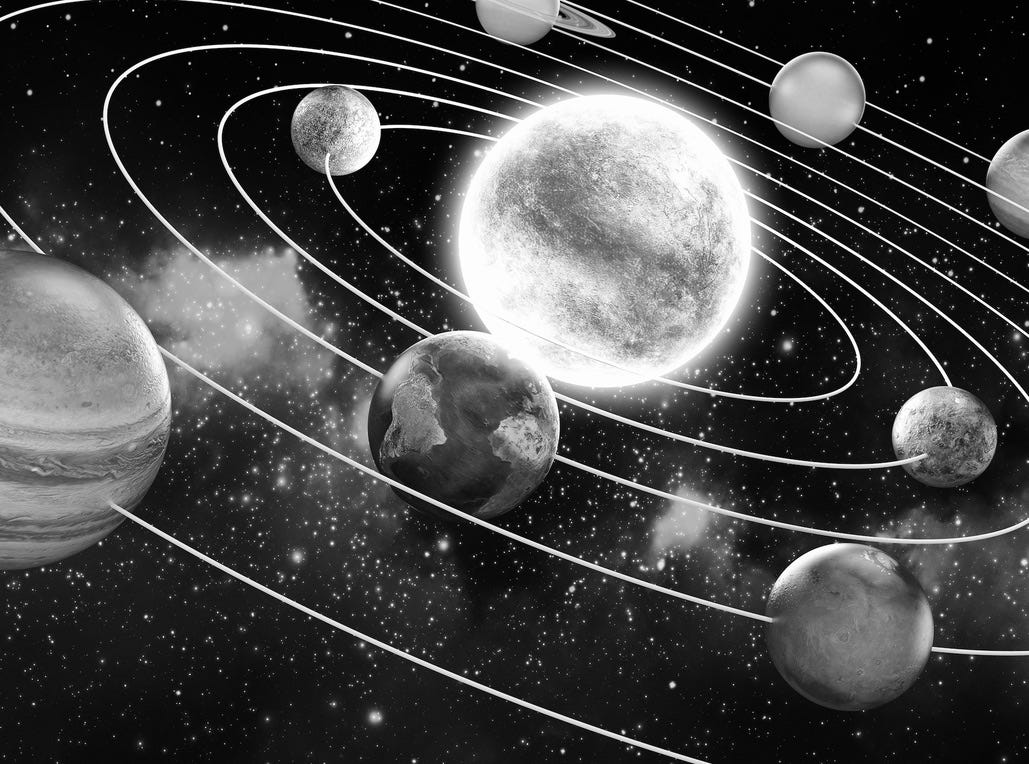
Not only is the Sun the largest body in our system, not only does it represent the center of our system, but it’s the primary source of light for all the other bodies in our system. Certain other bodies like Jupiter do radiate a certain amount of energy, even a little light, but it’s relatively minor by comparison, and certainly not extensive enough to illuminate any neighboring bodies. When we look up and see Jupiter, it’s actually the light of the Sun we’re seeing reflected back to us. As such, the Sun represents the only truly “self-referential body” in our local group. Said another way, all the planets shine by the reflected light of the Sun. That is, all of the orbiting bodies of our system acquire their meaning in reference to that solar principle. [3]
Music
Next, let’s look at music. In the various scales we use to play or compose music, there is a consistent pattern underlying all of them, which is that each contains a ladder of notes, a spectrum of tonal steps. In our familiar Western modality, these are known by the seven tones Do, Re, Me, Fa, So, La, Ti, culminating an octave higher at the next Do.
But notice how out of all those notes, only one is dominant or “primary”—that being Do. In other words, pick any note on a keyboard and you can make it into a Do, a base note from which an entire scale can be constructed. But if you want to play any of the other notes of the scale, you can’t do it until you’ve first established a baseline Do.
Of all the notes of the scale, in other words, Do is therefore the most fundamental; it’s the only one that’s completely self-referential, with all the other notes deriving their meaning and existence by reference to it.
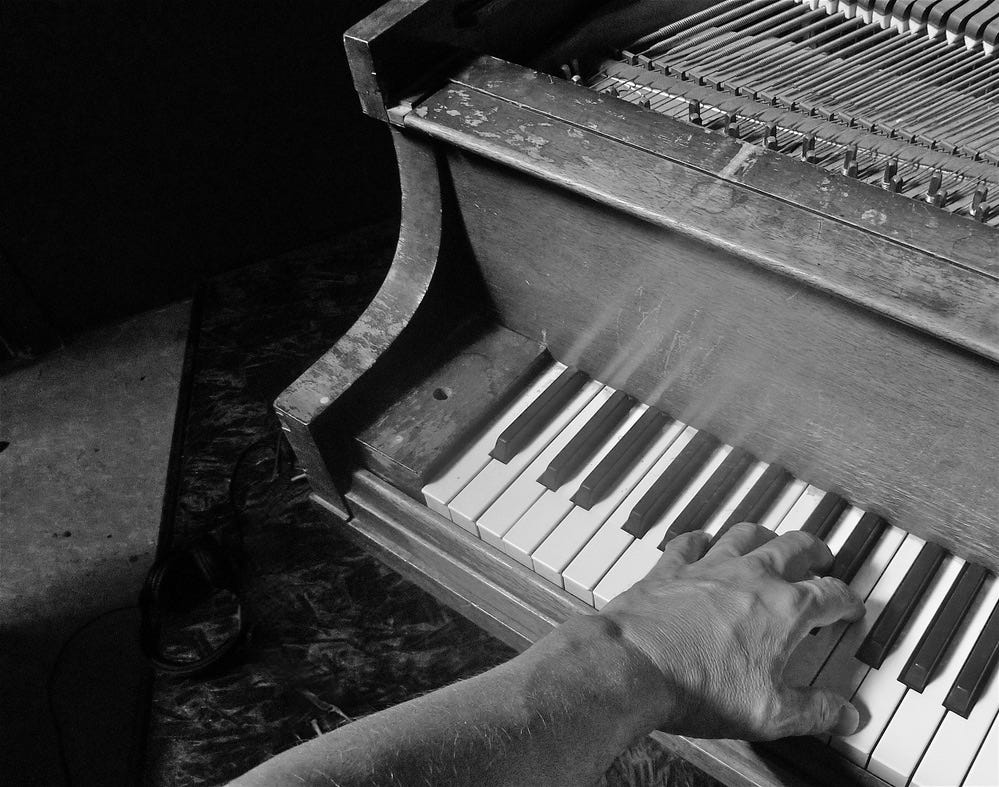
In a sense, you could therefore say that just as the Sun is to the solar system, so Do is to the notes of the scale. Analogically, all the notes of the musical scale “shine by the reflected light” of Do. [4]
Math
Our next correspondence is drawn from mathematics and the world of numbers. If you take the basic integers One, Two, Three, Four, and so on, you’ll find something in common with these previous two systems we’ve just examined. That’s because out of all the possible numbers in existence, only one of them is primary and fundamental—and that’s the number One. All of the other integers are secondary in importance since they depend on One for their existence. You can’t have the number Four without there being four Ones, just as you can’t describe Seven without saying there are seven Ones, and so on.
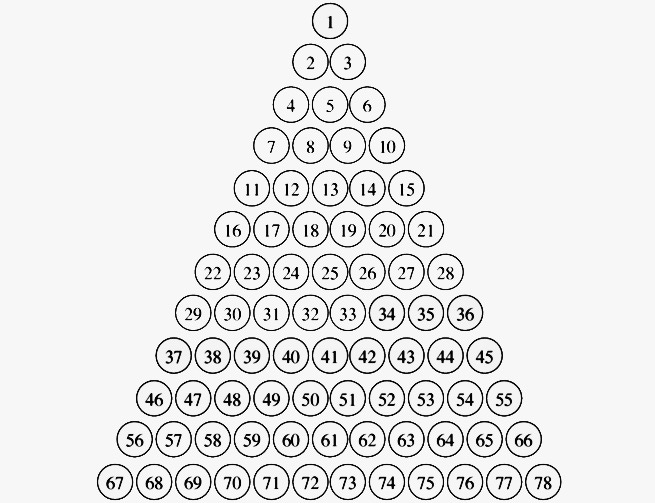
As such, the number One is the only integer that is completely self-referential and self-existent. In a manner of speaking, we could say that all the numbers “shine by the reflected light” of One. [5]
Esoteric Psychology
Now I’d like to introduce ideas from the system of spiritual psychology I’ve discussed in other books, that of the chakras. This doctrine holds there are thousands of energy centers throughout the subtle body, of which only a handful are primary.
Each of these primary chakras represents a particular state or level of consciousness, ranging from the more earthy and emotional concerns at the bottom end of the system to the increasingly mental and finally spiritual concerns associated with the upper centers.
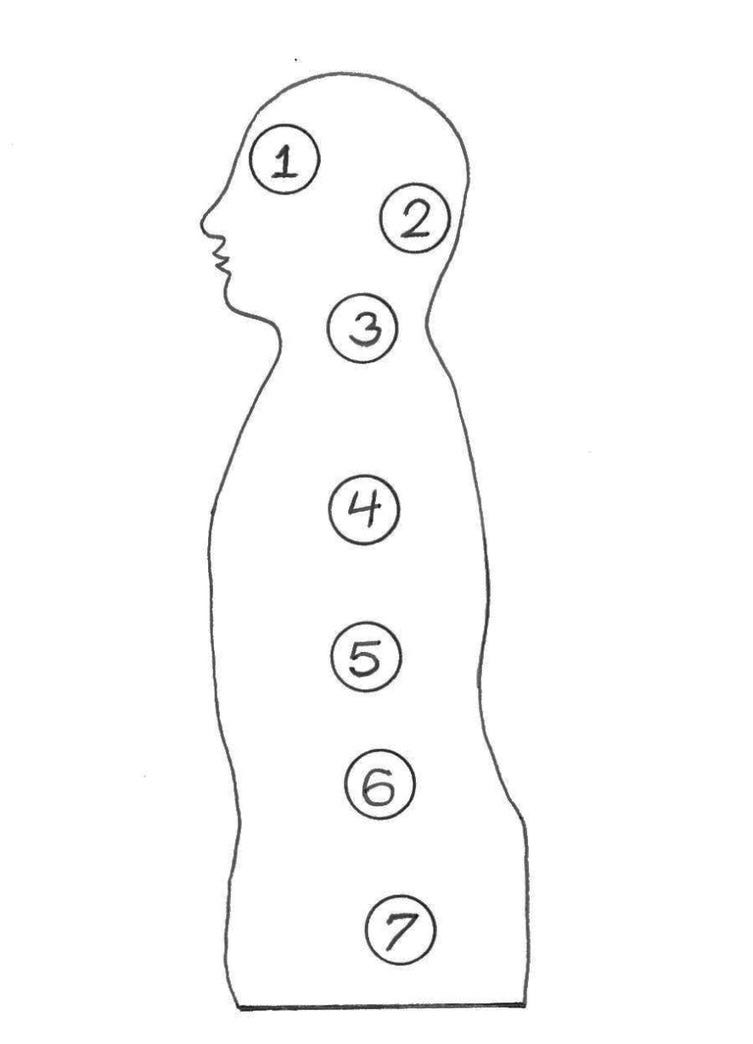
At the bottom of the spine (7) we have the root chakra, muladhara. Second from the bottom (6) is svadisthana. Third in line moving upward (5) is manipura. At the heart level (4) is anahata chakra. At the throat level (3) we find vissudha. According to teachers in the Kriya Yoga system, there is at the back of the head (2) chandra chakra, while at the center of the forehead (1) there is ajna chakra, also known as the “third eye.” (Note: I’m not including the so-called “1000-petaled lotus” at the top of the head, or sahasrara, simply because it’s less a function of personal consciousness and personality than it is a doorway to the Divine, or the transpersonal Self.)
Of all these centers, it’s believed that the chakra located in the forehead is primary. That’s because it is the seat and source of personal consciousness and psychology, the pure witnessing consciousness of I AM AWARE THAT I AM.
To draw on an earlier analogy, the energy of this center can be likened to the light bulb in a movie projector, which illuminates all the images issuing out of it. Similarly, our essential nature is pure spiritual light, and informs all of the permutations of consciousness that arise within our field of consciousness. As I’ve discussed in many other articles and books, some mystics believe that the analogy between the visible planets of our solar system and the chakras of the subtle body is actually quite precise, and goes as follows:
The ringed planet Saturn is equated with the lowest or “root” chakra; Jupiter with the second chakra; Mars with the third; Venus with the fourth, heart chakra; Mercury with the throat chakra; the Moon with the chakra in the back of the head (chandra means Moon in Sanskrit); and the Sun with the ajna chakra in the middle of the forehead. (There is no planetary correlate to the chakra at the top of the head, the “thousand-petaled lotus,” although some astrologers have assigned the planet Neptune to it.)
Of those seven basic chakras, ajna is considered to be the predominant one. So, in much the same way that the planets of the solar system shine by the reflected light of the Sun, we could say that all the lower chakras “shine” by the reflected light of the ajna chakra.
The Pyramidal Form
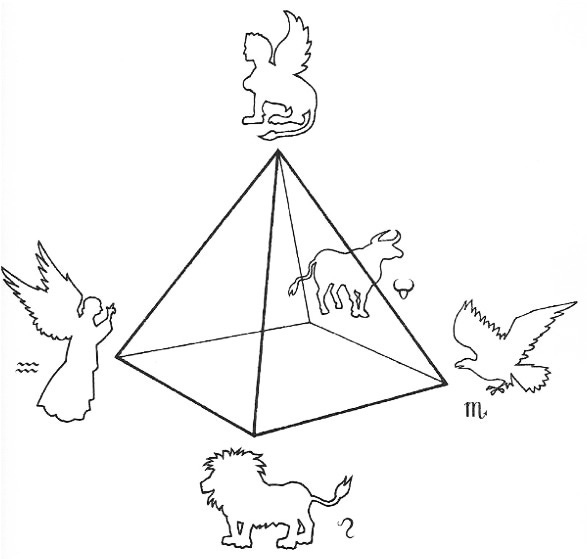
In an earlier chapter of my book So, What Am I Doing Here, Anyway? (which I posted in my previous Substack essay titled “The Great Pyramid as a Cipher to Existence”), I looked at how the simple shape of a four-sided pyramid embodies a host of symbolic truths, centering around the numerical principles of 3, 4, 7, and 12. Yet all of those factors draw their meaning in relation to that singular point at the pyramid’s peak. In a symbolic sense, we could therefore say that all those truths contained within the pyramidal form “shine by the reflected light” of that pyramidal apex.
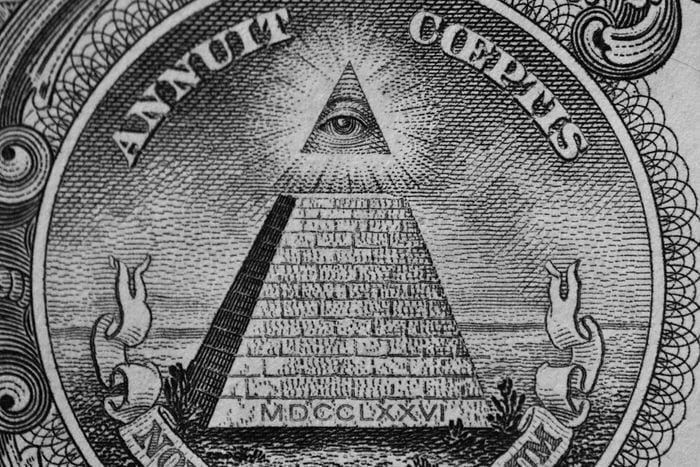
This idea is symbolically mirrored in the “all-seeing eye” depicted atop the pyramid on the U.S. dollar bill.
Sacred Geometry
Finally, let’s look at a slightly different aspect of geometry, where we find another level of correspondence with these other areas. Here I’ll be taking a cue from the Kriya Yoga teacher Shelly Trimmer, who first made me aware of the geometrical implications of this system, and it starts with a simple circle.
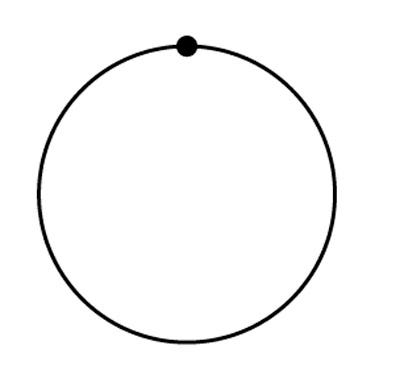
Pick any point along the rim of a circle, place a dot on that spot, as shown above, and let that be your reference point. Geometrically speaking, this becomes the zero-degree angle, known to astrologers as a “conjunction.” It represents something in perfect relationship with itself, and esoterically symbolizes the observer, the witnessing consciousness. We’ll let this be our ground zero from which all other points and angles on the wheel are established.
Now take a point directly opposite from that one on the circle, which gives us a 180-degree angle.
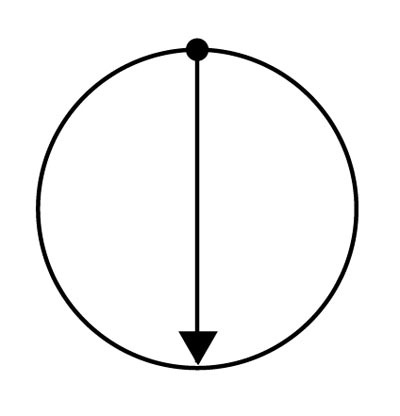
This angle represents the symbolic principle of opposition, of experiences and perspectives at a polar remove from one’s perspective. When we say that someone “did a 180,” for instance, it conveys the notion that they underwent a complete reversal in their opinion or approach. Fittingly, astrologers refer to this relation as the “opposition.” Whereas the 0-degree angle is the symbol of self-consciousness, the observer, the 180-degree is symbolic of the other, of not-self, of that which is being observed.
Or, we can choose to focus on a point of the circle that exists at a 120-degree angle from that original starting point, which astrologers refer to as a “trine” relationship. As shown below, this extends out in dual ways to both sides of the circle, since there are two 120-degree angles. Symbolically, this represents a relatively easy or harmonious relationship, which can manifest in the real world as harmonious or relatively “easy” situations or states of consciousness.
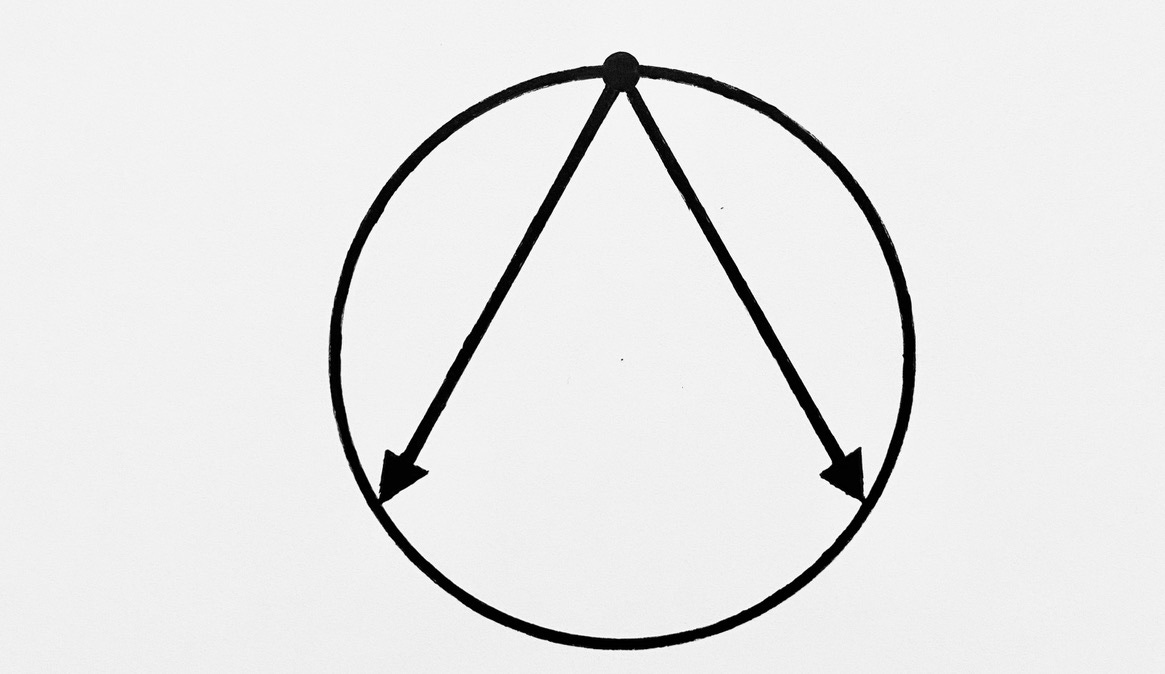
And there are of course many other angles possible besides these. But here’s the critical point: However many angles along that rim you choose to create, only one stands completely alone and self-referential: the zero-degree point, our original dot on the rim. All the others angles and degrees around the circle draw their meaning in relation to that starting point.
In other words, just as Do is the fundamental reference point in the musical scale, just as the Sun is the ultimate reference point in the solar system; just as the number One is the reference point for all integers; and just as the ajna chakra is the fundamental reference point of consciousness for all the chakras, so the zero-degree angle is the ultimate reference point for all the geometrical angles along the rim of the wheel. It is thus the only truly “self-existent” angle out of all possible angles.
Drawing upon our solar system analogy, you could well say that all possible geometric angles within a circle “shine by the reflected light” of the zero-degree point.
Conclusion
So what are we to make of all this? While all this may seem quite abstract to those unfamiliar with esoteric principles, I’d like to suggest there is something profound within this pattern, which I’ll explain in the following way.
For one, the fact that this ladder-like pattern exists in so many different systems, and in such a similar fashion—in each case involving a range of principles subservient to one dominant principle—strongly suggests that we’re looking at a genuine archetype, a universal principle that exists everywhere, and everywhen. As such, it likely provides us with a skeleton key toward understanding something important about reality on both the cosmic or personal levels. Let’s consider each of those.
First, on the cosmic level this ladder-like pattern seems to hint at a hierarchical, multilevel structure to existence itself. If so, it suggests, among other things, there may be multiple planes of reality besides just this physical one. Whereas modern science conventionally regards the material world as the sum total of existence, it may be just one of many levels, an idea long suggested in connection with what some have called the “perennial philosophy.”
But note that in every instance we’ve considered here, all of the varied principles are subservient to one primary principle—be that a musical note, a celestial body, a number, a pyramidal or geometrical point, or chakric center. This clearly suggests that one of the levels on that scale is fundamental; there is an ontological primary “note” or “ground zero” of existence itself, whether we choose to call that Brahma, God, Jehovah, the Absolute or Plotinus’s the One. There is a core truth underlying reality, which in turn gives meaning to all other myriad permutations and levels of reality.
Applying this concept now on a more personal level, this pattern seems to suggest that our own consciousness exists across multiple levels as well—and that one of those levels is likewise primary. Said another way, each of us possesses our own essential Do note, a fundamental ground of consciousness that lies at the core of being, or what Shelly Trimmer referred to as the I AM AWARE THAT I AM from which all our other states, thoughts, and emotions draw their meaning and existence.
But where exactly is that essential Do note, that I AM AWARE THAT I AM?
Understand, saying that it lies “at the core of our being” doesn’t mean it lies somewhere else, like a vein of gold buried deep underground and out of sight. Rather, it’s the very awareness comprehending these words right now, the consciousness that’s seeing through your eyes at this moment.
In other words, that essential Do note from which all the phenomena in your world draw meaning is none other than you. The environment around you, the screen or page on which you are reading this, all the sensations of your body and mind—all of these “shine” by the reflected light of your observing consciousness, right here, right now.
So, while science may continue to uncover many more secrets concealed in nature’s great menagerie of laws, from the mathematical patterns governing spiral galaxies to the tiniest atomic particles or “strings” within matter, it may well be that one of the most important of all is also the simplest, and is hiding in plain sight.
If so, then I believe it’s worth while considering what other implications this “divine scale” may hold in our understanding of the world and ourselves.
Notes
1. Quoted from a letter found on the Newton Project website: http:// www.newtonproject.sussex.ac.uk/view/texts/normalized/THEM00254 (spelling and punctuation modernized).
2. https://twitter.com/michiokaku/status/1382325614691160065
3. This naturally brings us back to a discussion of the Sun sign, and the key role in plays in any horoscope. Yes, there are many other celestial bodies in the horoscope, but the Sun does occupy a central position in that network, and that’s because, in a manner of speaking, all of the other bodies in the chart “shine by the reflected light of the Sun.”
4. When I suggested to Shelly Trimmer the possibility that the musical note Do symbolized the spiritual “pinnacle” or key note of consciousness, he gently disagreed, saying that since Do was the lowest note of the musical scale, it couldn’t really be equated with the highest spiritual principle; that honor, he suggested, should rightly go to the highest note, Ti. Since then, I’ve come to think the problem could simply be resolved by flipping our perspective around to see the scale as precipitating downward from Do, rather than ascending up from it. After all, a complete scale properly includes the higher octave of Do, as the eight note; as a result, our conventional bottom-up method of viewing the musical scale ascending from Do all the way up to Ti is really just a cultural preference, not a universal law. There’s no intrinsic reason we shouldn’t posit Do as the highest note, rather than the lowest, with the other tones precipitating downward from it—thus giving us the descending scale Do, Ti, La, So, Fa, Me, Re, and Do. This would not only allow the musical scale to intersect precisely with the model I’ve suggested here but would fit well with the classic esoteric notion that the manifest worlds precipitate downward from the Divine source.
5. It’s worth noting that in ancient Egypt, mathematics consisted almost entirely of fractions, but specifically fractions of one—e.g. one-third, one- sixteenth, one-eighth, and so on. (The fractions two-thirds and three-quarters were also used, but far more rarely.) Viewed esoterically, that practice may well suggest a belief in the fact that all phenomena derive from a fundamental unity.
Ray Grasse is a writer, astrologer, and photographer based in the American Midwest. He is author of ten books, most recently In the Company of Gods and So, What Am I Doing Here, Anyway? His websites are www.raygrasse.com and www.raygrassephotography.com.
Well put, thank you! I think science is catching up to the real nature and power of perception , and therefore real place of each human in the center of their universe. And therefore power of self-awareness, that is tremendous in directing perception and our reality.