
Sensitivities
Reflections on Intuition, Psychic Perception, and Compassion

[This is an excerpt from my book So, What Am I Doing Here, Anyway?]
I was talking recently with a colleague about the so-called “power of prayer,” especially when directed towards the benefit of others. Does it really make a difference in the lives of recipients?
My colleague expressed some skepticism about the matter—something I understand, since I’ve entertained that doubt more than a few times myself. But it just so happened that one day earlier I’d received an email from someone broaching this very subject, which offered some anecdotal evidence I found fascinating.
After I published An Infinity of Gods about the Kriya Yoga mystic and astrologer Shelly Trimmer, a fellow named Jeffrey Bruce Gold got in touch with me to say he’d read my book, and actually knew Shelly Trimmer quite well himself, having visited him and wife Deborah quite a few times at their home in Bradenton, Florida. We shared some of our anecdotes about Shelly (who passed away in 1996), but one of Jeffrey’s stories was particularly interesting to me. I asked Jeffrey for his permission to share it here:
I probably visited Shelly and Deborah about 10-12 times. One time—and one time only—I arrived on Longboat Key hours early. It was summer so it was very warm. I was hanging out on a beach near their house with nothing to do.
So I waded in the water. I didn’t get far and sat down in the Gulf with the water reaching up to my chest. I decided to meditate (breathe kriya) while sitting on the sandy floor there. I reached a far more balanced state than I usually reach, so I sent Shelly and Deborah warm thoughts, wishes, vibrations, or whatever one might want to call them. As I said, this is the only time I ever did that prior to a visit with them.
Eventually, I arrived at their house. Early in the conversation, Shelly said: “Thanks for the kind wishes you sent this morning.”
My mind was completely blown. I should add that he never said that any other time when I didn’t send the vibrations.
A fascinating story, but not altogether surprising, since Shelly struck me as an extraordinarily sensitive being. The fact that he may have picked up on Jeffrey’s intentions that morning hardly strikes me as impossible. As I mentioned in my book, there were times when he seemed to know things about me and my life there was no practical way for him to have known. Some of those were quite personal, some even embarrassing, but here’s one I feel comfortable sharing and that I’ve not published before.
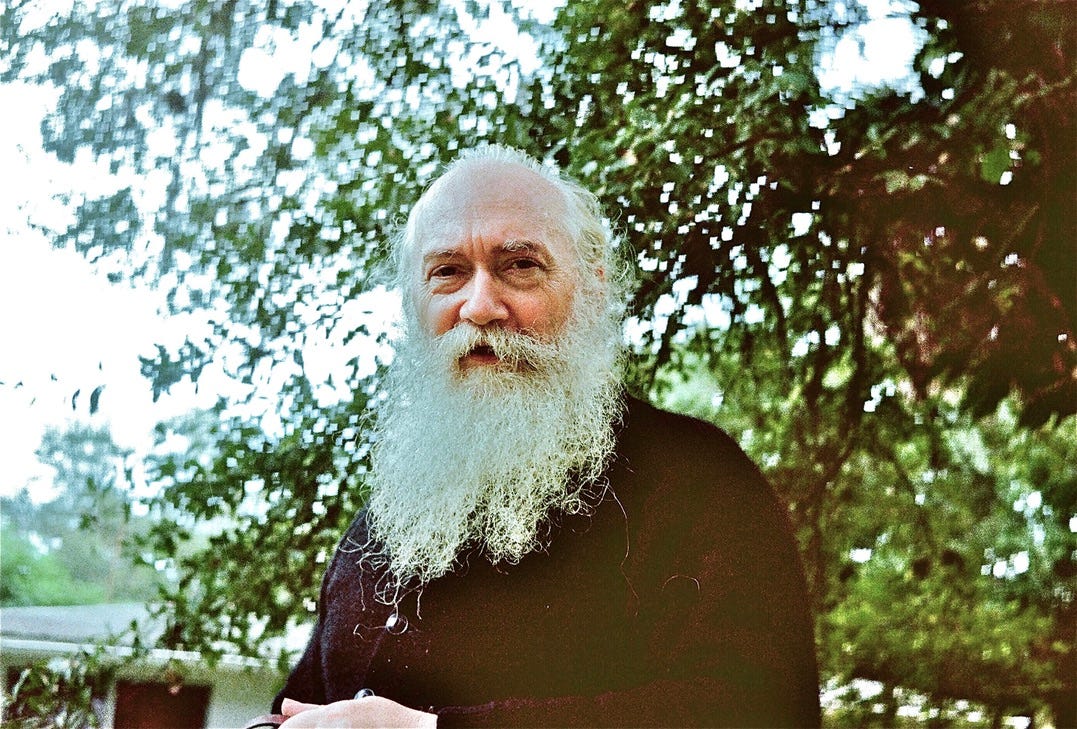
Shelly Trimmer, 1977.
It was around 1981 that I hit a particularly rough patch in my life. My long-term relationship with my first girlfriend had fallen apart, and on top of that were several other disappointments, all of which seemed to come to a head around the same time.
Literally on the same day my depression reached its lowest point, I was surprised to find a letter from Shelly in my mailbox. That was unusual in itself, not only because he wasn’t a prolific letter writer but because he normally didn’t reach out to students in an unsolicited fashion like that.
Even more surprising was the fact that this letter was extremely complimentary, filled with encouraging words about my work and future, all very upbeat in tone. That was especially unexpected, since he was normally pretty tough on me—not in a mean or callous way but simply in the way most good teachers tend to be, almost like drill instructors. I’d certainly never received anything upbeat like that from him before. The end result was that I felt like I was being thrown a life preserver in the midst of drowning, and I couldn’t help but be struck by how uncanny his timing was.
I had similar experiences around Goswami Kriyananda as well, who I wrote about in my book Urban Mystic. What follows is one particularly striking experience from the early 1980s, which I quote here from that book:
Throughout much of the time I studied with him, I struggled with meditation, often feeling as though I was simply spinning my wheels in the backwaters of conventional mind. I saw others sitting quietly and motionless during their meditations, but I usually felt frustrated by my own restlessness and inability to go very deep in my meditations.
But for one short but unusually fruitful stretch of time, I seemed to “strike gold” with one Kriya technique known as the Hong Sau mantra. This is a silent, strictly internal mantra that is coupled with breathing patterns.
For that relatively brief span of time, things came together for me in a powerful way, to where I felt as though I finally “got” what the technique was about—or at least one aspect of what it was about (since a given technique doesn’t necessarily have a single intended outcome). Each time I engaged this technique I experienced a heightening of awareness along with a welling up of blissful energy that was dramatic, and deeply pleasurable.
During one of Kriyananda’s talks during that period, I was sitting in the back of the dimly lit room and began practicing the Hong Sau technique. My eyes were closed, and I was completely silent, with nothing externally to indicate what I was doing internally. Then, shortly after I began feeling that surge of blissful energy in me, I heard Kriyananda stop lecturing in mid-sentence and go completely silent for about 15 seconds. That wasn’t at all normal for him during a talk, so I opened my eyes to see what was going on— only to see him peering through the darkness directly at me, as everyone else in the room now turned to see what he was looking at. Embarrassed by the sudden attention, with all eyes now directed at me, I stopped the technique, and Kriyananda resumed his lecture as if nothing had happened.
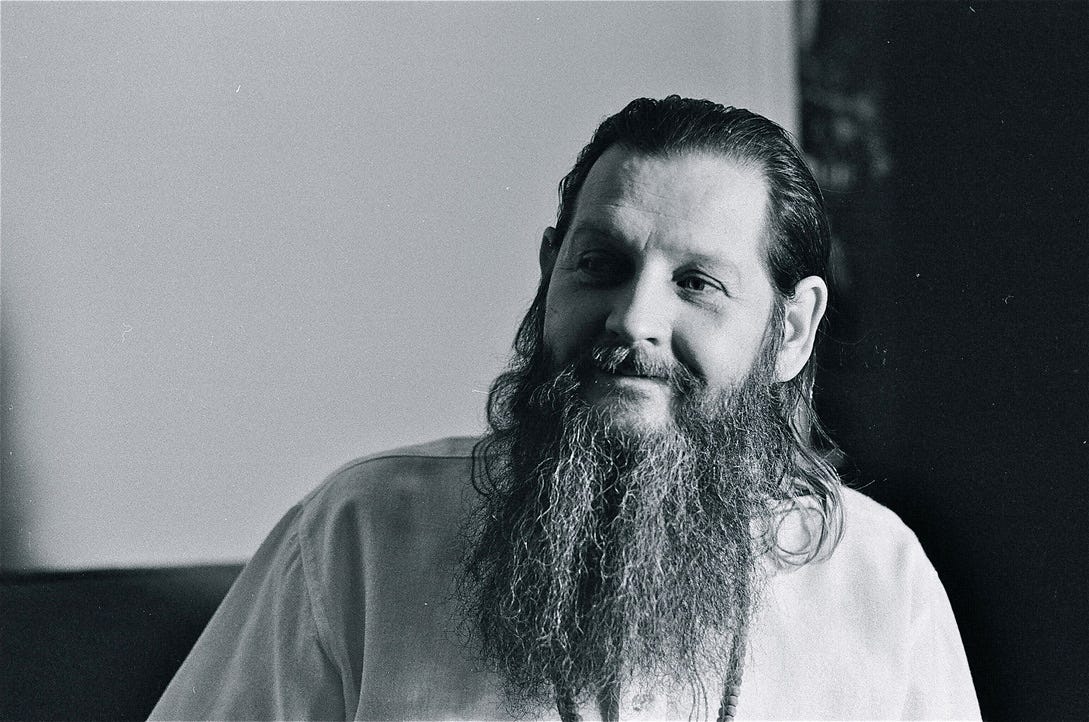
Goswami Kriyananda, 1983.
Exactly one week later, a friend of mine who didn’t know I was using that technique happened to walk into Kriyananda’s office to ask if the teacher would instruct him in the Hong-Sau mantra. Kriyananda replied, “Why don’t you ask Ray to teach it to you? He seems to be having some pretty good luck with it.”
When my friend told me of that exchange, I was shocked, not only because it indicated Kriyananda knew I was having a good meditation that day but even pinpointed the exact technique I was using. That was impressive, I thought.
I’ve only had a handful of experiences during my life where I felt like I was the one sensing things about others in apparently psychic ways. While not nearly as dramatic as those displayed by Shelly or Kriyananda, they were compelling to me.
One of those took place in July of 2012, while I was drifting in and out of sleep late one night. Suddenly, around 1:35 in the morning (central time) I heard the sound of screams. It was so distinct and real that I immediately woke up, sensing something violent must have happened. I could tell I wasn’t hearing it with my physical ears but in a more intuitive way, as if from inside my head. The overall impression was so striking I decided to look at the clock beside my bed and make a mental note of the time, so as to check news reports later that morning and see if anything corresponded to when I heard those screams.
On awakening several hours later, I turned on the TV and saw breaking news that a 24-year-old man had walked into a movie theater in Aurora, Colorado, during a midnight screening of The Dark Knight Rises. He set off tear gas grenades then shot into the audience, using multiple firearms. Twelve people were killed, 70 others were injured. The time when the carnage occurred? Precisely when I heard those screams—12:35 Colorado time.
Finally, I’ll close with an anecdote from my book The Sky Stretched Out Before Me about an incident involving the Dalai Lama from the time I was working on the staff of Quest Magazine for the Theosophical Society:
A few of us on the staff were involved with helping to organize the Parliament of World Religions held in Chicago in 1993, a mammoth undertaking that involved coordinating religious figures and groups from around the world. Like its predecessor a century earlier in 1893, the aim was to stimulate a dialogue amongst the world’s various faiths, hopefully culminating in a joint statement by the various speakers promoting greater political and religious harmony throughout the world.
There was a sense of electricity in the air amongst attendees, since this was a chance to mingle with others of like mind and possibly encounter well-known teachers like Swami Satchitananda or Amma, the “hugging saint.” The main activities of the Parliament were held at Chicago’s Palmer House hotel. While I attended as many talks as possible, the one I was drawn to was a press conference convened by the Dalai Lama.
As usual, His Holiness’s comments were inspiring and noble, concerning the need for harmony amongst countries and peoples, and all that. But frankly, most people don’t usually go to hear the Dalai Lama for his words as much as for his non-judgmental, compassionate presence.
The modest ballroom where he spoke was packed, standing room only, with roughly 300 people in attendance, many of them from the media. My boss at the magazine, Bill Metzger, was seated in the front row while I stood off to the side several feet away. It had been a rough week for Bill, since his wife was in the last stages of cancer and given only weeks to live. He was able to break away for just a few hours to attend this gathering, and it was obvious he felt relieved to have a little time off from his caretaking responsibilities.
The moment the press conference ended, the Dalai Lama darted from his podium and rushed over to Bill, clasping Bill’s hands fervently and uttering something to him (which neither of us later recalled)—then, just as quickly, throngs of admiring men and women rushed in to touch the proverbial hem of the holy man, as the Dalai Lama disappeared into a sea of outstretched arms.
I was struck by the fact that out of the hundreds of people in the room, the Dalai Lama zeroed in on Bill, who was going through such a terrible time. Nor was Bill the nearest audience member to him at the time, not at all. It may have been just a coincidence, but one hears stories like that in association with spiritual teachers quite often, in terms of their seemingly heightened awareness of others’ suffering.
So what are we to make of incidents like these? Is it really possible for us to be aware of the thoughts, feelings and intentions of others, even when those others are far away?
Far as I’m concerned, it’s not a problem at all—presuming you don’t buy into the myth that your consciousness doesn’t extend beyond the confines of your skin.
Which I don’t.
Ray Grasse is a writer, astrologer, and photographer based in the American Midwest. His websites are www.raygrasse.com and www.raygrassephotography.com.