
Rethinking Traditional Concepts of Dignities and Debilities

This piece was first published by: The Astrological Journal, Mar/Apr 2022, later included in my anthology StarGates:Essays on Astrology, Symbolism, and the Synchronistic Universe, as well as on Astro.com.
On more than one occasion I’ve had a student or client come to me and say something along the lines of, I have my Venus in Virgo. I’ve heard that this is the worst placement for Venus. Is that true?
I find comments like that disappointing, because they reflect a basic misunderstanding of horoscopes and the nature of astrology generally. As I’ve suggested in previous articles and books, we have to be careful in placing rigid value judgments on our astrological interpretations. But comments like the one above at least serve to shed light on the divide between the modern and traditional approaches to this ancient discipline.
Among the key points of disagreement between older and newer systems is the use of terms like “malefic” or “benefic.” For example, whereas many older texts tend to describe horoscopic patterns in comparatively black or white terms, even to the extent of using terms like “good” or “evil,” modern schools tend to be more ambiguous, with less inclination to make stronger value judgments. As we saw in our previous chapter, that can become so extreme at times that modern-day astrologers open themselves to criticisms of being too vague, with little clear awareness of the real-world problems posed by certain placements.
Enter the Neo-Traditionalists
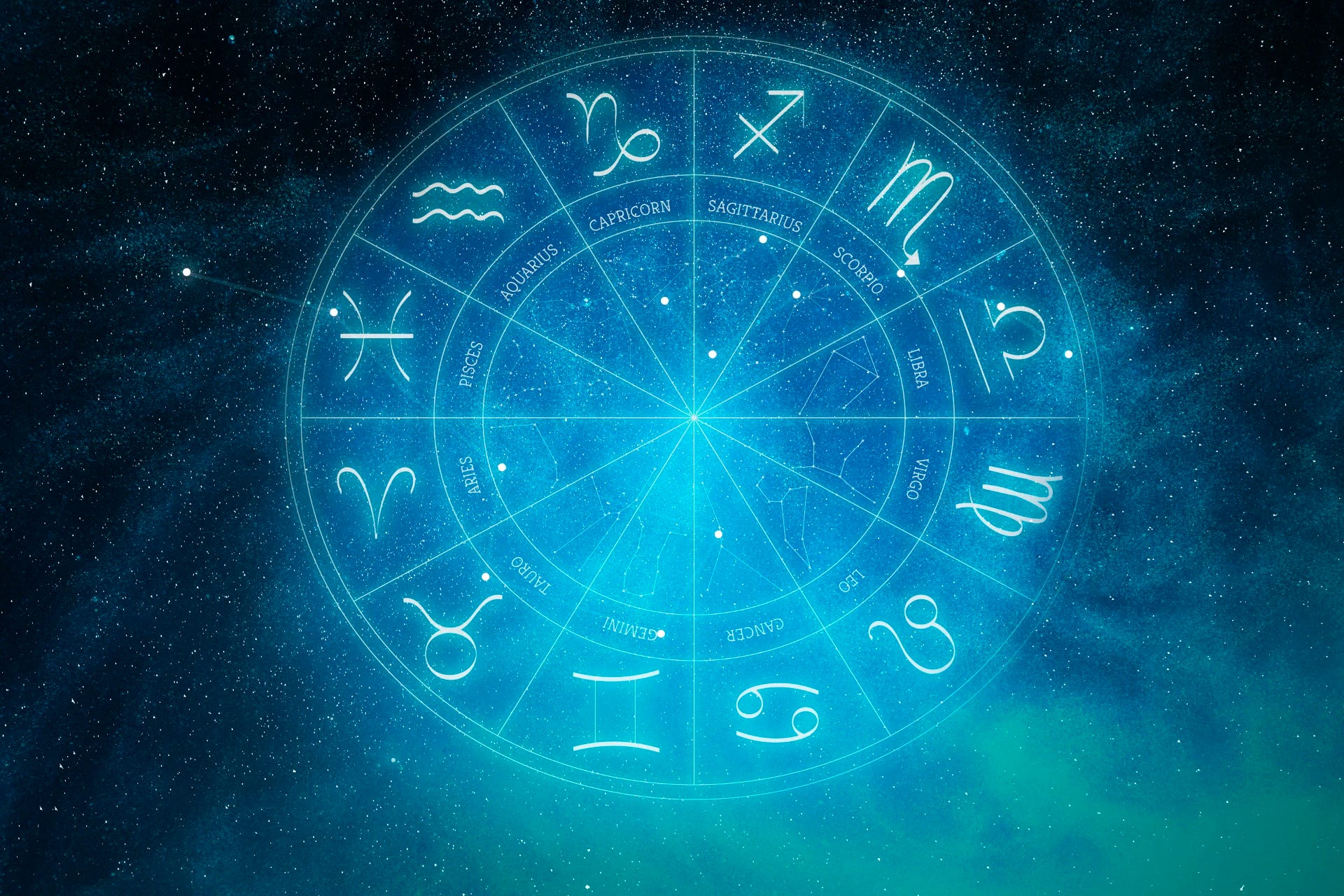
In recent decades, a growing number of practitioners in the traditionalist camps—particularly of the Hellenistic school—have gone to considerable lengths to bring greater nuance to the older terminologies and how we think about them. For instance, some have pointed out that terms like “malefic” actually serve a useful function in describing the subjective experience of challenging placements. As a result, saying that a transiting Saturn/Mars square is negative or malefic indeed holds a certain validity in terms of accurately describing how the individual him or herself may be experiencing it, emotionally. A similar point has been made about the so-called “dignities” assigned to the planets in their various zodiacal placements, with terms like “fall” or “detriment” traditionally seen as having a more negative connotation, while terms like “exaltation” and “rulership” (or “domicile”) are traditionally accorded more positive connotations.
Some modern practitioners are careful to avoid interpreting these concepts in the more extreme, black-or-white terms of older times, instead suggesting they simply relate to “how effectively can a planet convey its virtue.” [1] From this standpoint, a zodiacal placement like Venus in Pisces—the sign of that planet’s exaltation—would thus be seen as having an easier time expressing its inherent virtues, whereas in the sign of its fall, Virgo, it would have a harder time expressing those virtues.
Likewise, in the sign of Capricorn the planet Mars would feel more comfortable and “at home,” and have an easier time expressing its inherent virtues; whereas in the sign of its fall, Cancer, it would have a harder time effectively expressing those virtues. To put it a little differently, it’s sometimes been said that a planet in its fall is relatively weakened, whereas in the sign of its exaltation it is comparatively strengthened.
Sun Exaltation: Aries Rulership: Leo Detriment: Aquarius Fall: Libra
Moon Exaltation: Taurus, Rulership: Cancer Detriment: Capricorn Fall: Scorpio
Mars Exaltation: Capricorn Rulership: Aries, Scorpio Detriment: Libra
Fall: Cancer
Jupiter Exaltation: Cancer Rulership: Sagittarius, Pisces Detriment: Gemini
Fall: Capricorn
Mercury Exaltation: Virgo Rulership: Gemini Detriment: Sagittarius Fall: Pisces
Venus Exaltation: Pisces Rulership: Libra, Taurus Detriment: Scorpio
Fall: Virgo
Saturn Exaltation: Libra
Rulership: Capricorn, Aquarius Detriment: Cancer
Fall: Aries
Lingering Concerns
While I believe these terms have a certain value, especially when employed in traditional contexts (and with techniques such as horary), I still believe they can be problematic, even misleading at times. Let me give some examples of what I mean.
Consider my opening example of Venus in Virgo, which is traditionally the sign of this planet’s fall. According to the traditional Hellenistic perspective, that means that this planet should be less capable there of expressing its inherent virtues, less “at home” or less comfortable becoming what it is truly capable of. In some ways, it’s easy to see how the otherwise loving, aesthetic, romantic, and “flowing” instincts of Venus might indeed feel stymied when channeled through the largely analytical, discriminatory, and dissecting lens of Virgo.
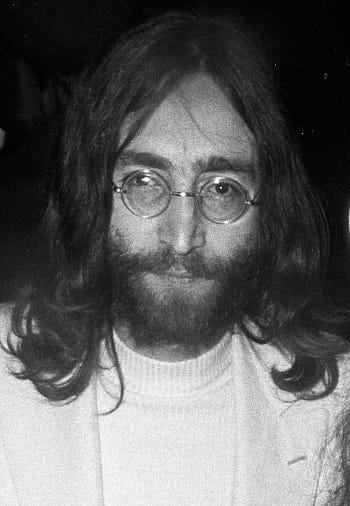
But while doing research on famous musicians several years ago, I was struck by the startling number of brilliant or notable singer/songwriters born with this particular placement: John Lennon, Mick Jagger, Sting, Joni Mitchell, John Mayer, Leonard Cohen, John Mellencamp, Eminem, PJ Harvey, Chrissie Hynde, Roger Waters, and Jack White. In short, some of the most creative songwriters of the last few generations were born with this planet in the sign of its supposed “fall.”
What are we to make of that? Clearly, most astrologers would agree that one of the “inherent virtues” of Venus is artistic expression or the appreciation of beauty. So if indeed Venus in this sign is supposedly “weakened” somehow, in the sense of having a harder time expressing its inherent virtues, how do we explain the fact that so many successful artists with this placement produced such notable (not to mention lucrative) works of art? Rather than being weakened or in some way debilitated, it seems that this planet’s potential qualities are actually enhanced by being in this sign—in certain contexts anyway.
Ahh—in certain contexts. . . Therein lies the rub. That’s because it’s entirely possible that in some contexts the qualities of Venus might well be hindered by being in Virgo, but in other contexts those inherent virtues might actually be enhanced. That’s because it all depends on what one is trying to do.
What do I mean? Well, suppose your primary goal in life is to have a perfectly contented love life where you feel totally satisfied with your romantic partner. In that case, I think this placement might indeed be problematic for some, since it can be so analytical and discriminating that one might have difficulty extending or even receiving unconditional love, or simply feeling content in relationships. Like I say—for some people.
However, what if your primary life-dream is to channel your artistic impulses through writing lyrics and music to songs, say, like our aforementioned singer-songwriters? In that case, it could actually be the best possible placement.
Let me say it a little differently: there is no sign placement for any planet that isn’t beneficial for some things and problematic for others. Simply making a blanket statement about how “planet x is weakened in this sign and strengthened in that sign” strikes me as an overly simplistic way to approach dignities, since it doesn’t sufficiently take into account the many nuances of those placements, or the subtleties of context. I’ll give a few more examples of my point.
Take Mercury in Pisces, which is considered to be the zodiacal place of its “fall.” It’s safe to say this could well be problematic for someone working a job requiring an eye for precise details and material facts, such as a proofreader, bank teller, or an accountant. But what if someone’s lifelong ambition is to be a poet, singer, a novelist, or even a mystic? In that case, having this placement might be the best possible placement—as it was for Dane Rudhyar, Eckhart Tolle, Edgar Cayce, Victor Hugo, and the famed yogi Ramakrishna.
Or take the example of Saturn in Aries, considered by traditionalists to be the place of this planet’s “fall,” and thus where Saturn’s inner virtues are supposedly weakened or debilitated. How then how do we explain someone like my earlier example of George Washington, who was born with this planetary placement and became one of history’s most celebrated military leaders? The explanation is simple, really. For someone who came here to exercise discipline, structure and authority in matters of war, aggression or competition, Saturn in Aries could well be the best possible placement for someone—although there might admittedly be a steep learning curve in realizing and cultivating that potential. (Indeed, it’s possible those very difficulties with in positions of “fall” or “detriment” are precisely what leads to the constructive potentials inherent in those placements, through an arduous process of refinement born of trial-and-error.)
What I’m saying here applies in the other direction, too, in terms of the so-called “exalted” zodiacal placements, traditionally considered the most intrinsically positive and favorable positions for planets. A good example of that is Venus in Pisces, where this body is supposedly strengthened and more able to express its inherent virtues. But here as well, that only gives one side of the story. How many individuals have I seen with this placement who had difficulties balancing their checkbooks, or who didn’t use sufficient discrimination when selecting partners and friends (unlike Venus in Virgo, which can sometimes be a bit too discriminating in such matters)? In some contexts, Venus in Pisces is indeed an extraordinary asset, while in other areas it’s much more problematic.
As I said, it’s all a matter of context.
The View from 30,000 Feet
I should point out that my own perspective on this stems from a philosophical view I’ve long subscribed to with horoscopes, which I’d sum up this way: Every person has exactly the horoscope they need to accomplish what they came here to do. In other words, I believe that we take on the lives and the horoscopes we do in order to serve some purpose in our spiritual growth. If that’s true, then there is nothing in the horoscope that’s inherently or exclusively “wrong,” “evil” or “bad.” Difficult, challenging, or problematic? Absolutely. But inherently or exclusively negative? No.
As a result, even the most seemingly difficult pattern in a person’s chart can be seen as somehow suited to that person’s destiny, and as such harbors a potentially constructive expression or outlet somewhere. This in no way denies the potentially problems of those placements, but simply aims to provide a fuller sense of their potentials. The challenge then becomes one of finding the best possible outlet for those energies.
As I’ve touched on earlier, this applies to planetary aspects as well as zodiacal placements. Take a difficult pattern like Saturn-opposition-Mars, an energy that often indicates considerable frustration, repressed anger, problems with authority figures, thwarted ambitions, and so on. But what if someone came here to discipline and control their aggressive impulses, like the famed martial artist Bruce Lee? Then it might be—and in Lee’s case, was—the best possible aspect.
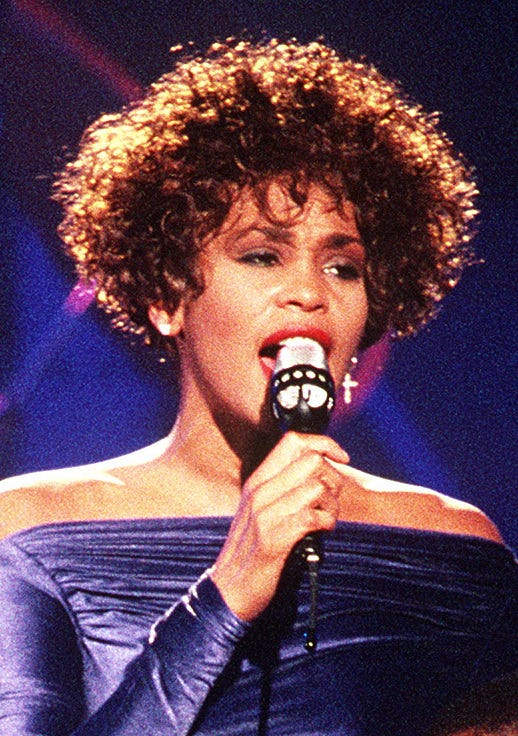
Or take a pattern like Neptune-square-Venus, an aspect which sometimes shows disillusion in romance, carelessness with money, addictive tendencies, or other problems. But what if someone’s innermost desire is to be a musician or singer—like Whitney Houston, Madonna, Frederick Chopin, Joan Baez, or Tina Turner? In that case, that aspect might be just what the doctor ordered, despite whatever other life-challenges might come along with it. But even in areas of romance, it could wind up being an extremely favorable aspect—once one has dealt with the more challenging tendencies it presents, that is.
In the end, I’m suggesting the need for greater caution in our use of some familiar terms and perspectives when reading charts. It’s not that the classical dignities and debilities are wrong, or that there aren’t certain values to concepts like “fall,” “detriment,” “malefic” or benefic.” In fact, I believe a good argument can be made that certain zodiacal placements are subjectively felt as more pleasant or unpleasant than others—such as the Moon in Sagittarius versus the Moon in Capricorn or Scorpio. But that’s a very different story than talking about the full range of potentials inherent in those placements, be those constructive or destructive. To my mind, this difference in approaches is akin to the difference between seeing in black-or-white or in technicolor. Using the “technicolor” approach to sign placements and aspects, one has access to a wider palette of possibilities to draw on.
For me, then, it all comes down to finding the right context and expression for our myriad energies. I’d suggest that we approach every element of the horoscope with that in mind, because anything less than that fails to honor the true complexity of either horoscopes or of human experience.
Notes:
(1) Cited by astrologer Wade Caves, in personal communication with the author via social media.
Ray Grasse is a writer, astrologer, and photographer based in the American Midwest. He is author of ten books. His websites are www.raygrasse.com and www.raygrassephotography.com.
If astrology is to play any kind of a meaningful role in the 21st century then it needs to ditch the reverence for tradition and switch to a more empirical stance. It's for this reason that I appreciate you listing numerous compelling examples to make your point about Venus in Virgo.
Terms like exaltation and fall strike me as simplistic, arcane and clearly incompatible with the evidence available to us as modern, psychologically complex humans in the digital age with access to thousands of examples of any astrological factor we care to investigate.
This was a good read, thanks for sharing.
“Ahh—in certain contexts…Therein lies the rub.” I agree wholeheartedly with this distinction-- context being a factor which can so often shift the black-or-white value judgment as well as the astrological counselor's narrative (i.e., when planets in hard aspect are “reconciled” by softer aspects). You can add Don McLean to your list of famous singer/songwriters with Venus in Virgo's “fall.” In his case, context is underscored in the extreme! (Born Oct. 2, 1945 4:17 am New Rochelle, NY: Mercury—ruler of Venus in Virgo and Virgo Ascendant—closely conjoins Sun/Jupiter/Neptune/Chiron in Libra, and is in mutual reception with Venus in Virgo!)