
Frank Herbert

[Excerpted from When the Stars Align.]
Around 1980, not long after I’d begun to try my hand at writing, I learned that I could meet and possibly even talk with authors at book signing events in the city, and there were quite a few of those happening in downtown Chicago. I was looking for both inspiration and encouragement by pursuing such encounters, and that’s pretty much what I got.
I’d been a fan of the book Dune and heard that its author, Frank Herbert, would be signing books in the city, so I made a point of taking the train down to see him.
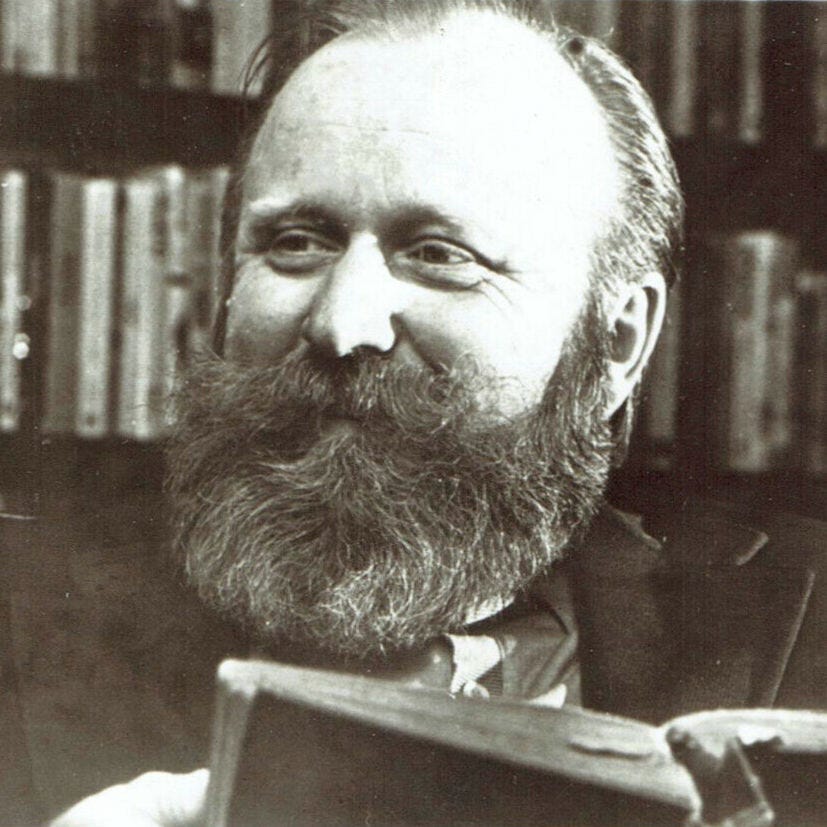
It turned out to be a group book signing affair, held in one of the city’s big department stores. There were maybe twenty writers spread out around the room. Off to the one side were four very different individuals seated just a few feet from one another: Charles “Bermuda Triangle” Berlitz, political commentator Arnaud de Borchgrave, reformed con man Frank Abnagale (subject of Spielberg’s movie Catch Me If You Can), and Frank Herbert. Quite a mixed crew in that corner.
But there were surprisingly few people there to meet the authors, either because the event hadn’t been well advertised or because people weren’t interested in meeting these particular authors. After all, these weren’t romance novelists or best-selling whodunit writers.
At any rate, Berlitz and de Borchgrave looked decidedly uncomfortable sitting there, especially right next to each other. Some of their discomfort may have had to do with the fact that almost no one was buying their new releases or asking for autographs. But both Abnagale and Herbert seemed reasonably happy in their skins, despite the paucity of visitors. Abnagale was holding forth with a couple of admirers about his past escapades (he had recently been on The Tonight Show talking to Johnny Carson about those very escapades) and looked relaxed. I went up to Herbert with my dog-eared first edition paperback of Dune and handed it to him; he seemed glad to sign it.
With no one else around, I decided to ask him some questions, and was able to speak with him for about twenty minutes about an assortment of things. I asked him about the proposed movie version of Dune, which I’d been hearing rumors about. He said it was slated to go into production under director Alejandro Jodorowsky, with figures like Salvador Dali playing key roles, but that the entire project fell apart before getting off the ground. As far as he knew, the producers were currently in talks with David Lynch about taking on the project. He didn’t seem particularly concerned one way or another about the project, which surprised me.
When I told him I’d just started writing and asked about his own experience with the craft, he spoke about the enormous commitment and hard work involved, but didn’t express any particular angst or sense of suffering about it. He didn’t strike me as your classic tortured artist, which was a bit of a contrast to the some of the other writers (and writers) I’d met or read about.
Before leaving, I asked him for his birth information, which he gladly provided (October 8, 1920, 7:18 a.m., Tacoma, Washington). He added that his wife practiced astrology and had erected his horoscope for him. He didn’t seem to know much if anything about the subject himself, but was obviously open to it. When I looked up his horoscope on arriving home later that day, I saw that his Sun was positioned at 15 degrees of Libra—the same degree as my own Moon. That undoubtedly explained why I felt so comfortable talking with him, since Sun/Moon connections can be one of those synastry factors typically showing an easy flow between individuals.
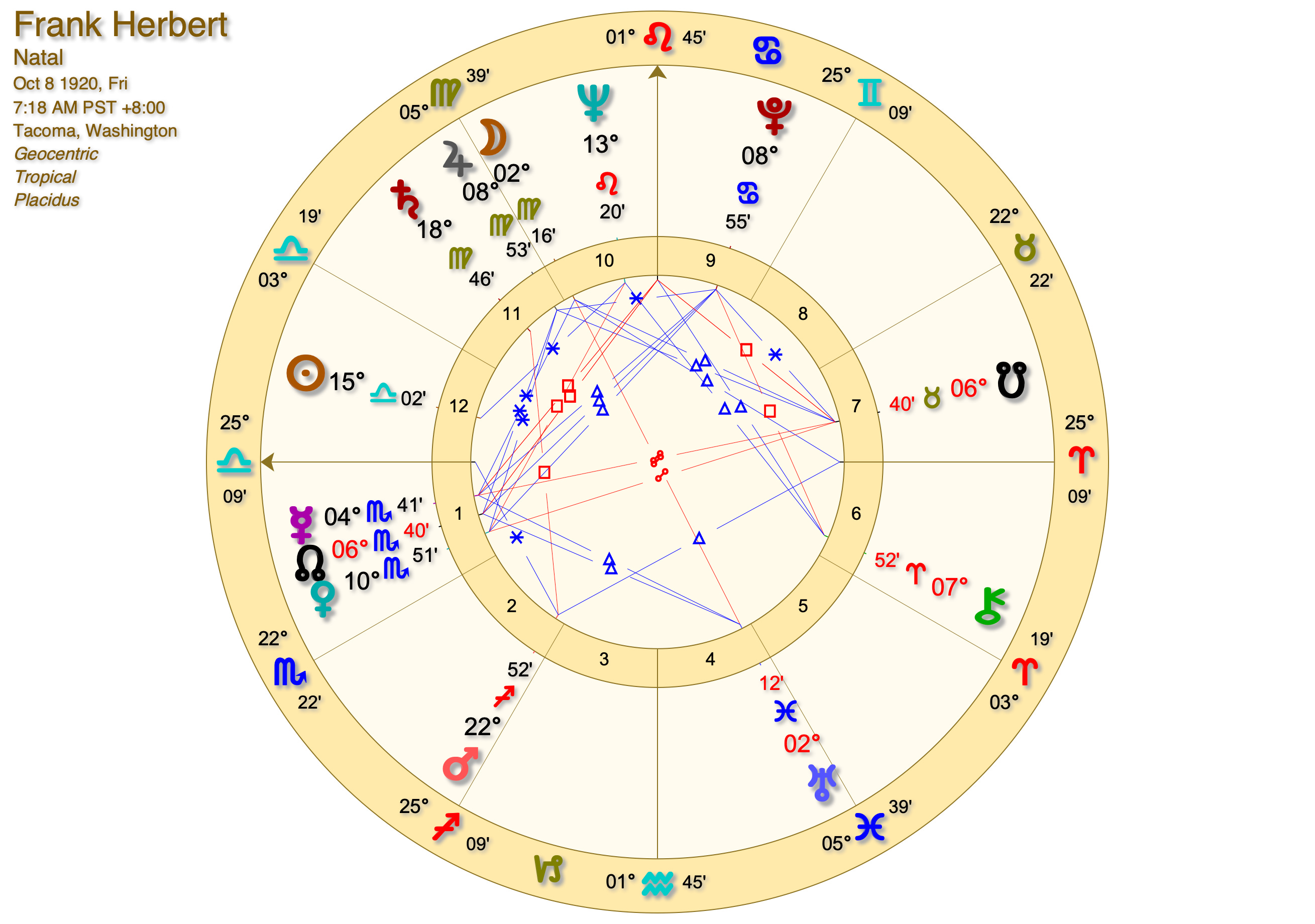
He certainly had the chart of a writer, I thought, what with Mercury in the 1st House forming a Grand trine to Pluto in the 9th House of publishing and Uranus near the 5th House of creativity (not to mention a sextile to the Moon and Jupiter in Virgo, and a conjunction to North Node and Venus). I also found it interesting that his chart had Neptune as the most elevated planet (forming a sextile to the Sun)—considering so much of his Dune series centers around themes of messianism, which is a very Neptunian topic.)
Just a few years later, I was surprised to learn that Herbert had passed away—surprised, because he was only in his mid-sixties at the time. I wish I had been able to keep that copy of Dune but I had to sell it on eBay some years later to pay off some medical debts. At least I still have the memory of that meeting, which is worth quite a bit more to me than a signed book.
Ray Grasse is a writer, astrologer, and photographer living in the American Midwest. He is author of ten books, and contributor to many anthologies. His websites are www.raygrasse.com an www.raygrassephotography.com.