
Does The Horoscope Continue Working After Someone’s Death?

In a discipline replete with unusual features, one of the most unusual in astrology is the fact that transits or progressions of planets to someone’s horoscope seem to continue working long after that person has passed on.
It’s often the case that a famous celebrity or politician will die, then years later they’ll experience a huge resurgence of popularity or notoriety: a major film, TV show, or written biography about the person will appear— and lo and behold, you’ll see strong indications in their chart of some newfound prominence or attention happening for them right then. Or a person will die and their body will be exhumed years later as part of some investigation, and it takes place precisely when some “resurrectional” transits are firing in their horoscope, like Pluto crossing their Ascendant or a Saturn return. In earlier writings I’ve mentioned the life and death of mythologist Joseph Campbell as an example of this post-mortem principle in astrology, but here are a few others.
Having received my degree in film, for years I closely followed the work of filmmaker Orson Welles, so I was delighted when the United States Post Office announced in 1999 they were issuing a commemorative stamp honoring him and his film Citizen Kane.
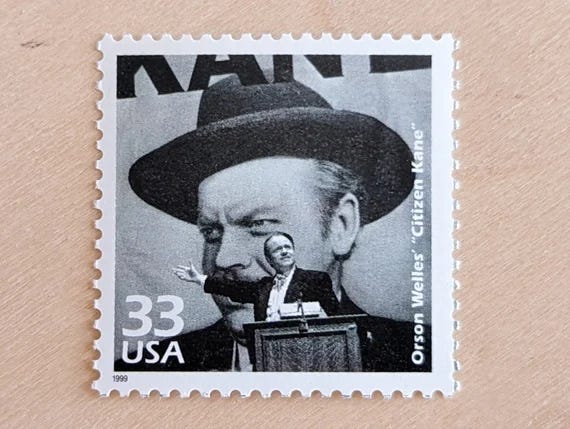
I couldn’t help but notice that Welles’ legacy was being touted on several other fronts during that same time as well, with the release of TV shows like HBO’s RKO 281 and the Tim Robbins’ film Cradle Will Rock. Suddenly, Welles and his work were extremely “hot” again. I was intrigued by the convergence of all these factors, and looked at his horoscope to see if something might explain it. Among other things, I saw he was precisely in the midst of his posthumous Uranus return. Appropriate? You bet, not only because it shows his life coming full-circle in a way but due to the symbolic connection between Uranus and the media, which this confluence of developments showcased in particular.
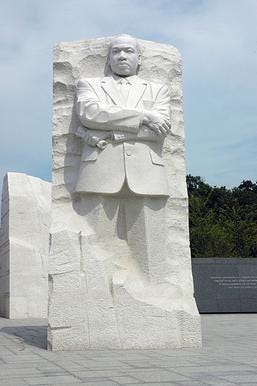
Here’s another example. In 2011, an imposing statue commemorating the legacy of Martin Luther King Jr. was unveiled in Washington, D.C., as part of a larger memorial to the man. His face and legacy were suddenly so omnipresent in the media, I thought there must surely be something triggering in his horoscope right then—and indeed, there was. The unveiling of his memorial occurred within just a few days of his Uranus return, but also close to his Jupiter return and his Neptune half-return as well. By any standards, that was a tectonic year for MLK, even if his spirit wasn’t around in physical form to appreciate it!
My astrological colleague Karen Christino recently called attention on social media to another example of this phenomenon associated with a statue, but this one portraying a decidedly different figure: the leader of the Confederate army during the U.S. Civil War, General Robert E. Lee. A statue of the general has stood in Charlottesville, Virginia since 1924, but in the wake of controversy over Lee’s past connection with slavery and racism, the statue was melted down and rendered into bronze during the fall of 2022. Lee died in 1870, so it naturally prompts the question: was this development indicated by any modern activations to Lee’s horoscope?
Indeed it was, and in a particularly striking way: exactly as this literal melt-down occurred, transformational and alchemical Pluto was transiting over Lee’s natal Sun, the symbol of ego and public reputation. One would be hard-pressed to come up with a more fitting transit for this event than this.
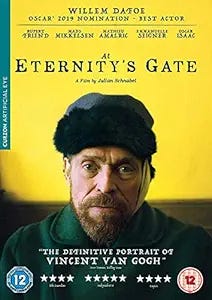
Nor does this sort of thing only just happen with the benefit of 20/20 hindsight—the lazy fallback of some astrologers, alas. (I’m reminded of a comedian on late-night TV years ago who played a psychic with the catch phrase, “I predict the past!”) Some 15 years ago I examined the horoscope of artist Vincent van Gogh and noticed that his Neptune return would be coming up in 2017, give or take twelve months on either side. That was when this distant planet would be making a complete return to where it was at his birth in 1853. I marked down that upcoming time in my computer’s calendar, mentioned it to a few friends on social media, and kept my eyes peeled for any significant attention being paid to him during that time. My best guess was it would most likely take the form of some major film or TV series based on his life and work.
As it turned out, that’s when the artist cropped up in a number of places, but especially via a highly celebrated film about his life, At Eternity’s Gate. Directed by Julian Schnabel, it starred actor Willem Dafoe in the lead, and was filmed in 2017 but released in 2018. It not only came out during van Gogh’s Neptune return but within days of a Neptune station, thus amplifying the influence of that return exponentially. (The movie went into wide release on November 16, Neptune changed direction on November 24.) On top of that, Pluto was crossing over his Descendant/Ascendant axis at the time, suggesting a bringing forward of old themes and energies from his past into the present day.
We could cite many examples of this phenomenon, drawing on the lives of other well-known figures from history—Abraham Lincoln, Walt Disney, Madame Blavatsky, and countless others—and I’m sure many of my colleagues could cite examples as well.
The question is, what does a phenomenon like this really say about astrology?
To my mind, examples like these clearly undercut any simplistic mechanistic or “force-based” theories as to how astrology really works. Why? Because how could celestial energies coming down from the heavens affect someone when that “someone” is no longer even alive? Who or what is being affected in those cases, exactly?
My own take is this. The explanation here is almost certainly spiritual or metaphysical in nature. A chart continues working in this way because it is an imprint in the cosmic mind. Whereas the physical body comes and goes, the horoscope has a life of its own. Unlike a purely physical entity or phenomenon, the chart is essentially a mental phenomenon in the mind of—dare I say it?—God, Allah, Brahma, or as Plotinus called it, the One.
Your horoscope “works” in these ways not because of some tangible energy like electromagnetism or gravity affecting your body and brain, but because your personality is a living entity in the cosmic imagination, not unlike Hamlet existed in the mind of Shakespeare or Ahab in Melville’s imagination. That’s not to say there are no physical energies involved with astrology at all, simply that they represent a comparatively small facet of its workings. In the case of post-mortem astrology especially, it’s as though the planets continue to affect the legacy and reputation of that individual over time, beyond just that person’s physical presence.
The horoscope doesn’t abide by strictly mechanical laws any more than an idea in your mind does, or a figure in a playwright’s imagination; it abides by the “laws” of the universal imagination. This explains not only how a horoscope continues working after death but illumines such otherwise mysterious workings of astrology such as “day for a year” progressions, the theory of correspondences, horary astrology, and the division of both the zodiac and horoscope into twelve parts—none of which quite make sense from a purely materialistic standpoint but which are quite sensible in a universe based on laws of the mind.
In short, one’s horoscope lingers because our presence continues to exist as a living meme in the fabric of reality itself. As a spirit, you may well move on from this world, casting the body and all its works behind, but the idea of your personality, and all it’s done, remains forever imprinted on existence, and along with it the horoscope and its celestial signature. That remains.
*******
Adapted from So, What Am I Doing Here, Anyway?: Astrological and Philosophical Essays (Wessex Astrologer, 2024).
Ray Grasse is an author, astrologer, and photographer living in the American Midwest. His websites are www.raygrasse.com and www.raygrassephotographer.com.