
BRAIN KOAN

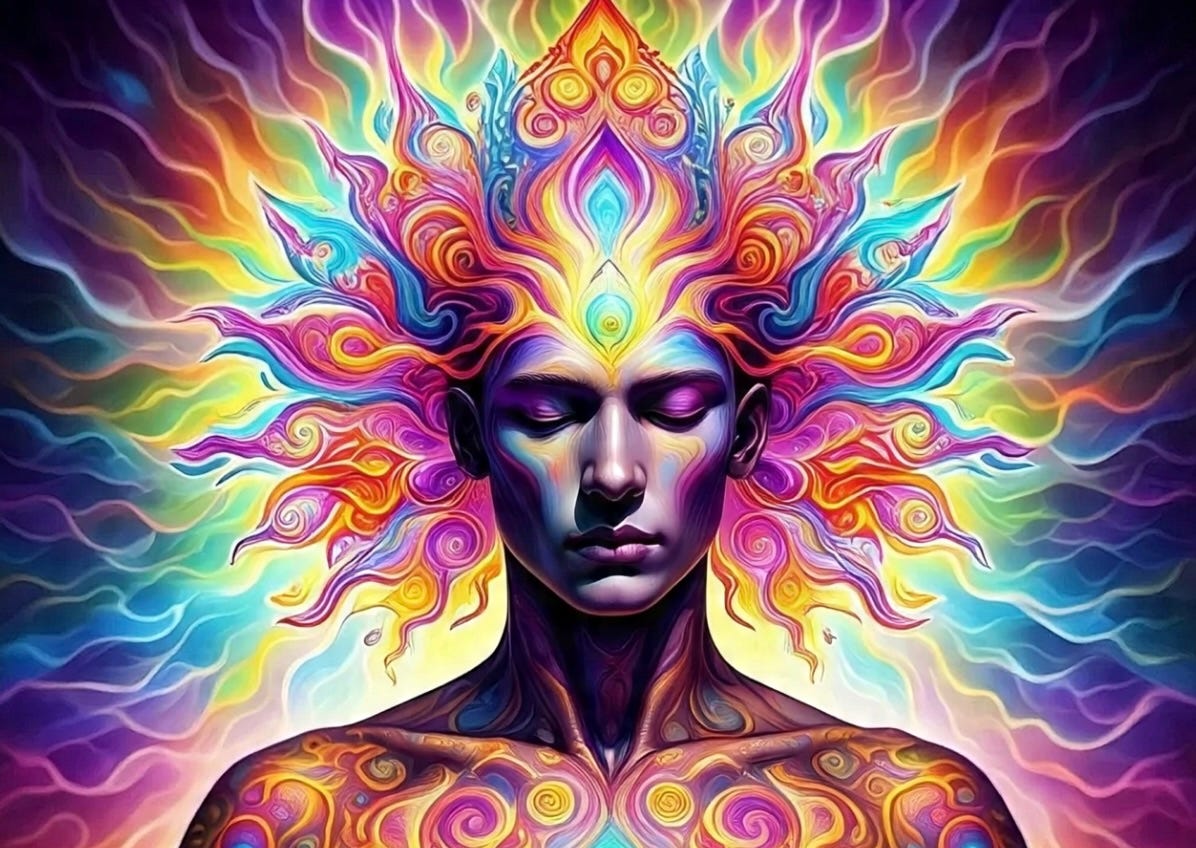
[This is adapted from chapter 22 of my book When the Stars Align.]
Imagine if you could look at someone and actually see their brain.
Crazy idea, I know—except that’s exactly what happens when you look into someone’s eyes. That’s because the eyes are the one portion of the brain that actually reaches the surface of the body—the retina, anyway. That means that when you see their eyes, you’re really seeing their brain.
Or consider the fact that there are almost 100 billion neurons in the brain—about as many as there are stars in the Milky Way galaxy—and in turn, each of those neurons forms connections to other neurons, all of which adds up to 1 quadrillion (1000 trillion) or so connections.
There are boatloads of interesting facts like that about the brain, enough to fill a book or two. Or three.
Interesting factoids aside, though, what I’d like to look at here is a fundamental question that lies at the root of all things brain-related, namely:
What actually is the “brain”?
There’s a reason I ask that question.
Not long ago I came across a scientific paper which attempted to explain, in strictly materialistic terms, how everything we perceive in the outside world is really just a construct in the brains. In a very matter-of-fact way, the author explained how the colors we see, the sounds we hear, and the meanings we ascribe to phenomena and people—that’s all put together and re-presented in this lump of meat up here in my skull. It’s all taking place in my brain.
It got me thinking about a question I’ve been pondering ever since I was in college: Doesn’t the idea in that paper mean that our concept of the brain is also a construct of the brain?
And if so, where is all of this—including your perception of these words right now—really taking place, if indeed the brain is nothing but a construct in and of itself?
What exactly is doing the thinking?
And what exactly is doing the observing?
Ray Grasse is a writer and photographer living in the American Midwest.
Excellent questions, Ray!