
ARTIFICIAL INTELLIGENCE IN THE AGE OF AQUARIUS

(First published in Quest Magazine, Winter 2026)
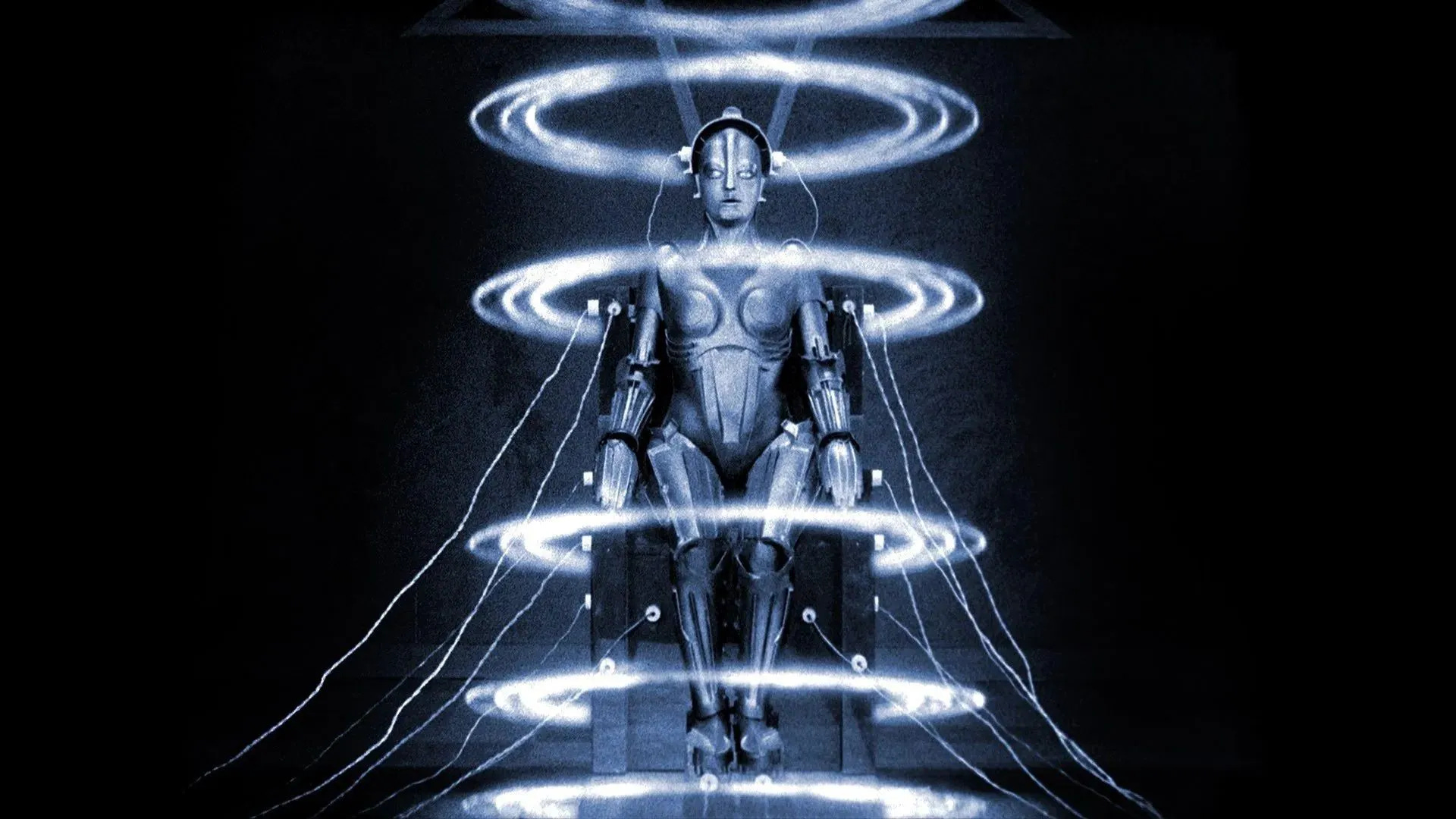
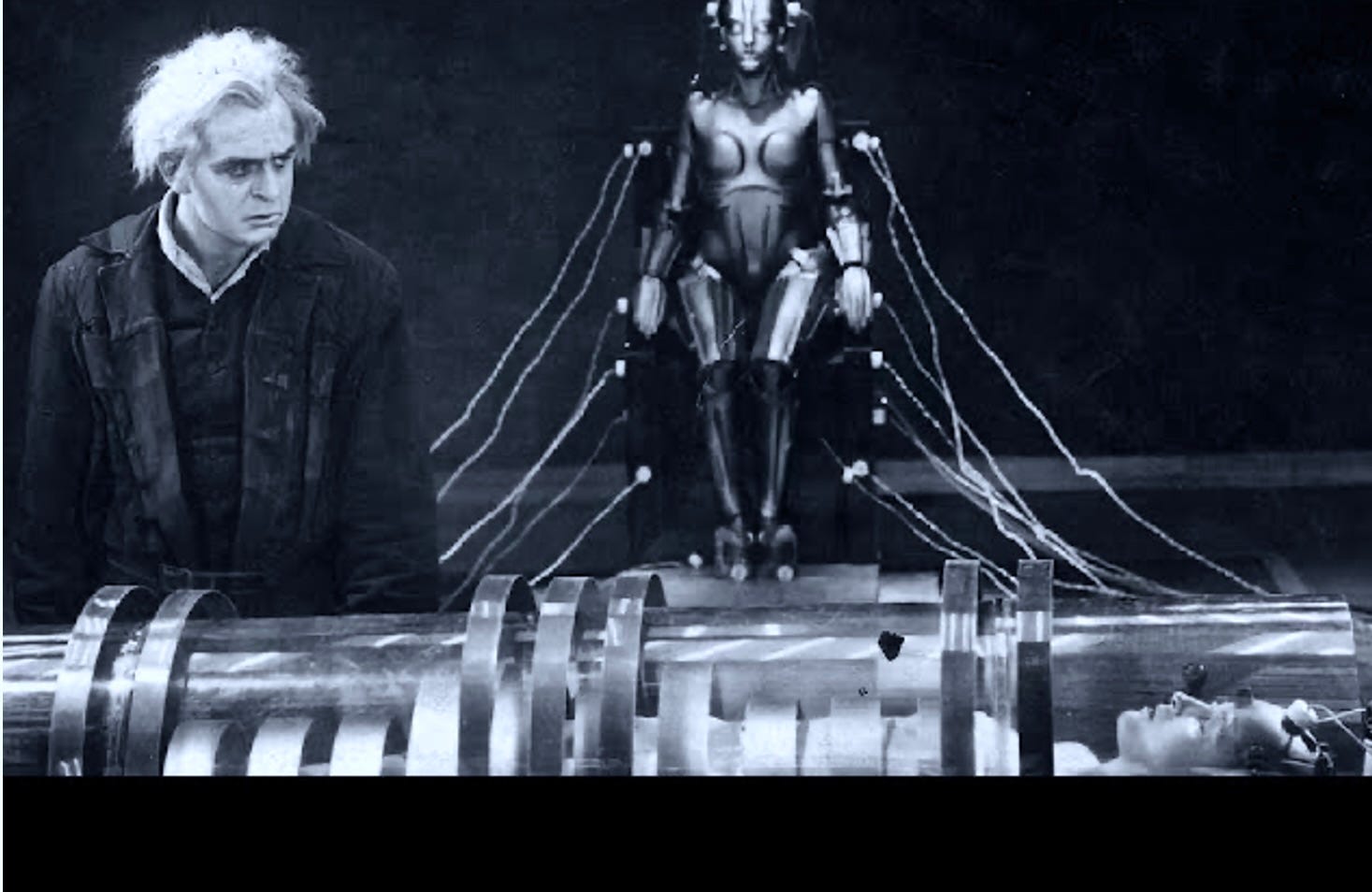
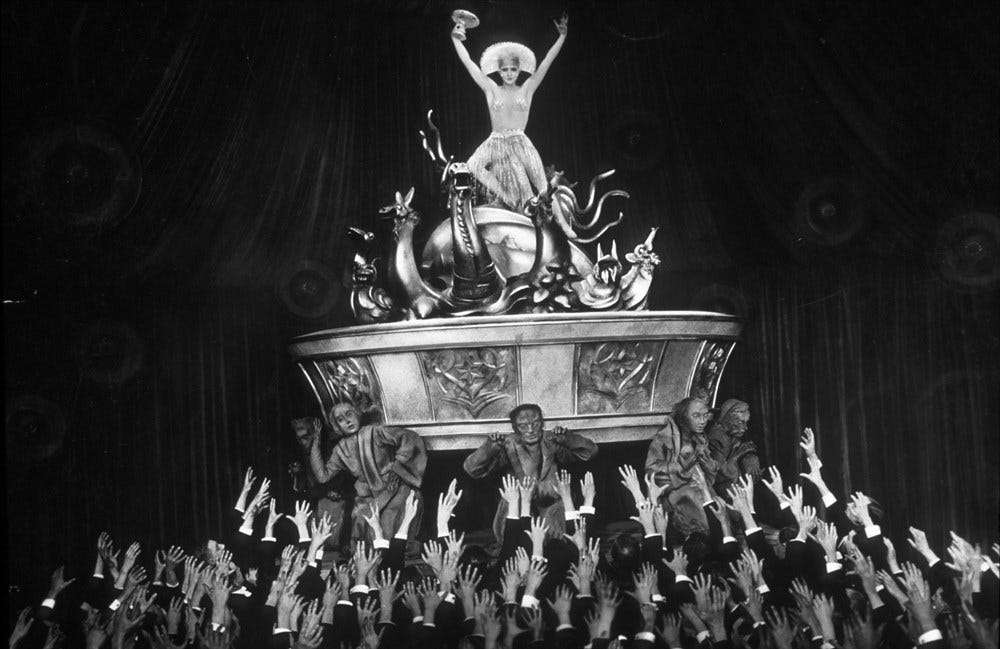
Though a critical and box office failure on its release in 1927, Fritz Lang’s movie Metropolis has since come to be regarded as not only technically groundbreaking for its time but nearly prophetic in some ways.
In addition to its depiction of a future society split by enormous class divisions, its story involves a robot created by a mad scientist that’s given the features of a beautiful woman, and is used to manipulate the working masses for the nefarious ends of the elites. It’s an early film depiction of artificial intelligence, or AI—one made all the more striking due to the future time frame in which the story is set: the mid-2020s.
In other words, right now.
Since that time, of course, the subject of AI has become a nearly omnipresent one in both cinema, television, and literature, leading many to muse over both the perils and promises of this rapidly evolving technology. As it so happened, when editor Richard Smoley told me the theme of an upcoming issue of Quest magazine would be that of “Intelligence: Human and Artificial,” it so happened I had just watched Lang’s film again several nights before, and was struck by how timely that film has become.
Is humanity on the verge of a profound change as a result of AI? It certainly seems so. When you stop to think about it, it’s apparent that our lives have been changed in virtually every respect by the introduction of computers, which now infuse every part of our lives—ATMs, credit cards, movies, the Internet, YouTube videos, our smart phones, cars and appliances, and so on. One way or another, these are all made possible by computers—that is, by artificial intelligence.
But all this raises another, very different question: Why is this happening right now? Is the timing of this development simply a matter of chance, the result of blind historical forces in action? Or is there something deeper and more archetypal taking place?
What I’d like to do in this article is approach this question from a perspective I’m personally more familiar with—namely, astrology. In that spirit, I’d like to suggest that we can draw some useful insights from a doctrine known as the “Great Ages,” a broad perspective that suggests that roughly every 2100 years there is a seismic shift in the symbolic dynamics of history and of human psychology. According to this doctrine, we are said to be moving from the Age of Pisces to the Age of Aquarius.
While the exact timing of this changeover is hotly debated, it’s safe to say there is considerable overlap involved in any such transition, as we now find ourselves straddling the divide between these two great epochs. While it’s beyond the scope of this short piece to explain all the astronomical and astrological dynamics involved in this process (for that, I’d refer readers to my book Signs of the Times), even a basic overview of some essential principles can help shed important light onto the extraordinary changes taking place in our world right now.
From the Era of Water to an Era of Air
In part, the deeper significance of any astrological Age can be understood in terms of the underlying “element” it represents, with each element symbolizing a particular mode of consciousness. There are four of them in all—Earth, Water, Fire and Air—and each is repeated three times throughout the entire zodiac.
For the last two millennia, we have been under the influence of the “watery” Age of Pisces. Simply put, that means that humanity has been perceiving both the world and itself largely through the lens of emotion, and alongside that, feeling-based beliefs. To be sure, the Piscean influence has been neither all good or all bad. In its more destructive form, it’s resulted in an era characterized by dogma, persecution, self-abnegation, and a mood of escapism to a heavenly realm beyond this one. More constructively, though, that same watery emphasis has ushered in a certain awakening of soul, an ethos of devotion, and a certain new dimension of conscience.
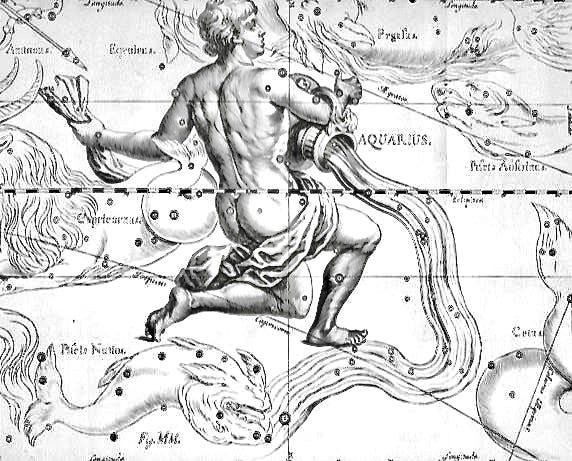
In contrast, the emerging epoch of Aquarius is ushering in a phase governed by the element Air—a far more mental mode concerned with thinking and communication. That suggests that the emerging Great Age will be one where the mind and information, rather than emotion and interiority, reign supreme. Terms like the “information superhighway” and the “information revolution” are just two examples of that emerging shift; the modern separation of church and state is yet another, as our rational minds begin to disengage from the more dogmatic and more emotional concerns of the old order.
And whereas the previous Great Age was one that witnessed great sea explorations, the emerging Aquarian era is already associated with a startling rise in aviation technologies and space travel, with humans quite literally learning to master the air realm. The media also employs metaphors reflecting this elemental shift when it says that a show goes “on the air,” or when a broadcaster “takes to the airwaves.”
The Three Faces of Air
But critical to understanding the deeper significance of Aquarius is realizing that there are actually three different Air signs: Gemini, Libra and Aquarius. This relates to the fact that the principle of “mind” expresses itself through three distinctly different—and increasingly broader—contexts.
For example, the first of the three air signs in the zodiac, Gemini, relates to the principle of mind in its most personal and common form, such as one might employ when talking to friends, family members or neighbors, or when calculating an equation such as 2 X 3 = 6. On the other hand, Libra’s focus is somewhat broader, and more concerned with the interpersonal mind, as when a teacher or lecturer speaks before a class or audience. It’s still “mind,” but of a more interactional nature.
But the sign Aquarius represents the broadest and most collective form of mind and intelligence, in terms of mentality and thinking applied to large-scale social interactions as well as to universal truths and principles. Some simple examples of Aquarian disciplines would include such areas as science, sociology, technology or engineering
Take science, for instance. Properly understood, science isn’t just about one person’s opinions or subjective beliefs, but about ideas that can be confirmed by colleagues and peers, and thus have comparatively more objective value. Likewise, technologies like television, smart phones, and computers involve the pooled efforts and thoughts of many thousands—perhaps even millions—of individuals. Similarly, while there are many different religions or denominations debating the nature of God, as occurred during the Piscean Age, there is little disagreement now amongst scientists as to how electrons, gravity, rocket engines, or computers operate. Likewise, when an online AI system answers a question you’ve posed to it, it doesn’t do so from the perspective of a single perspective, a personal “me,” but by drawing on the collected ideas of humanity, a more impersonal “we.”
In a sense, these are all the direct result of the Aquarian collective mind.
Grasping the Big Picture
What I’m suggesting is that the rise of computers and AI mirrors a tectonic shift in humanity’s evolution, which astrologers have referred to as the Age of Aquarius, or what Jungian psychologists might describe as a rise of the “mental function.” This is a shift that holds extraordinary potential to change our lives in dramatic ways, but it’s important to understand both the constructive and destructive possibilities of that change.
At its most positive, it’s likely that we’ll continue to witness an extraordinary expansion of our mental horizons, in part through developments like the Hubble Telescope, space travel, genetic technologies, archaeology, research into the human brain, cinema, television, and of course AI systems like ChatGPT and GROK—many of which are channeled now through the technology of the Internet, which is the exoskeleton of this new collective intelligence. As a result of all these developments, the average high school kid now has access to information about the world and history that even Copernicus and Aristotle couldn’t have imagined. It’s an extraordinary democratization of knowledge.
In turn, this wave of collective intelligence and pooled knowledge is making possible forms of mental creativity that didn’t really exist previously. As one way to frame this, consider how each historical epoch has ushered in its own unique brand of “genius.” In the Age of Taurus, we saw extraordinary achievements in humanity’s work with stone that still mystify experts, best exemplified by the monuments and sculptures of ancient Egypt; the Age of Aries saw historic military geniuses like Alexander the Great and the Chinese emperor Qin Shi Huang; the Age of Pisces saw the birth of great mystical geniuses like Meister Eckhart, Zen master Dogen, and Hildegarde of Bingen, along with creative geniuses like Leonardo da Vinci, Michelangelo and Bach.
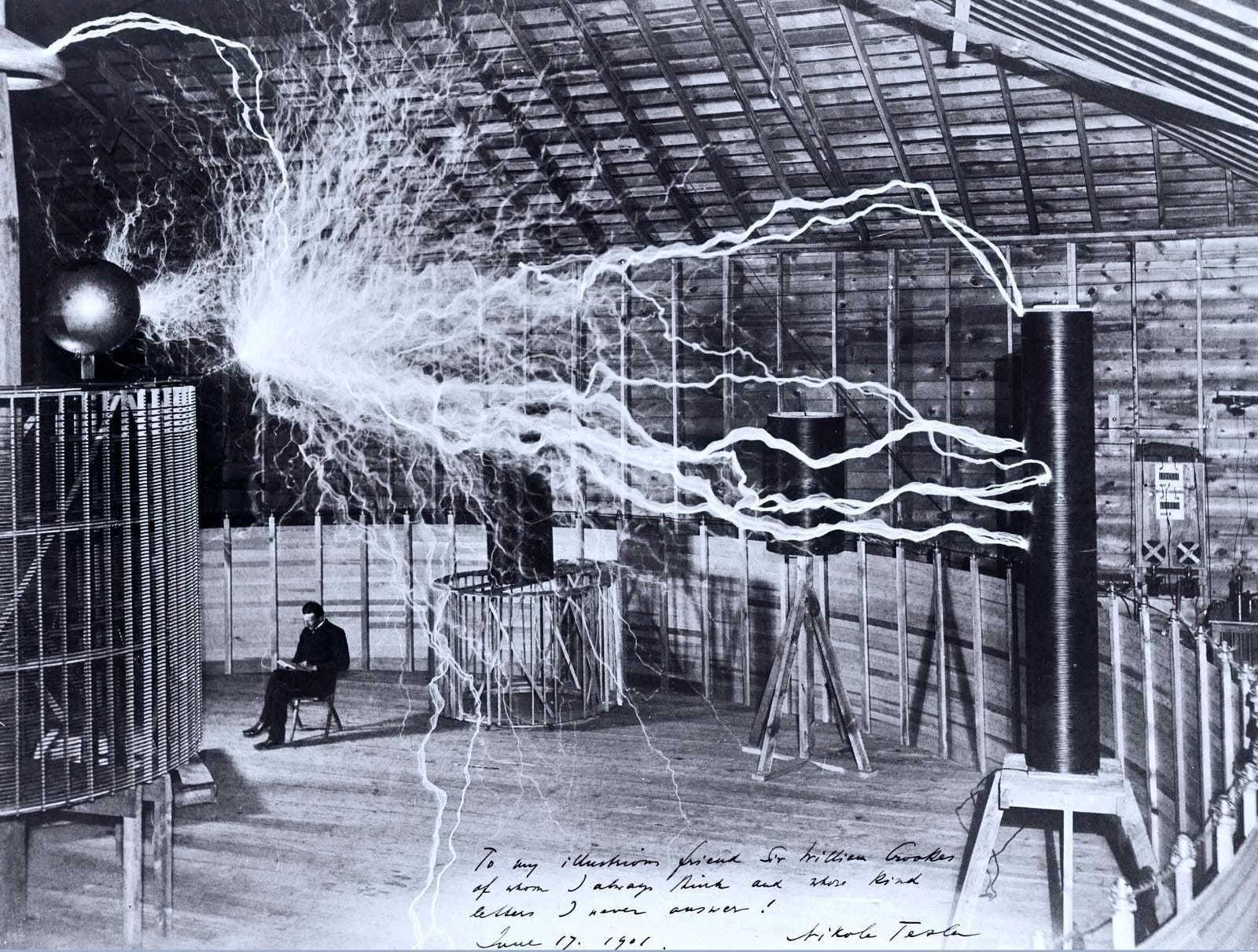
In turn, I’d suggest that the Aquarian Age will likely see the emergence of intellectual or scientific geniuses ala’ Einstein, Thomas Edison, and Nikola Tesla; while on a more philosophical level it’s giving rise to synthesizing thinkers like Joseph Campbell, Carl Jung, and Jean Gebser, who focused their attention less on the beliefs or ideas of any single religion than on the deeper principles and mythic archetypes underlying all of them. We see a similar Aquarian-style focus with groups like the Theosophical Society, the Unitarians, and the Bahai’, who likewise advocate a more synthesizing and non-denominational approach to spirituality.
The shared knowledge made possible through modern telecommunications and AI has expanded research possibilities exponentially, but it’s even possible we’ll witness a quantum leap in our mental abilities through such factors as genetic augmentation or machine/mind interfaces that “upload” knowledge or skills directly into our brains, ala The Matrix. (“Whoa,” as Neo famously said in the original 1999 film; “I know kung fu!”).

The Dark Side
But to no one’s surprise, there are considerable dangers here as well, both psychological and existential in nature.
The most obvious of those has been treated countless times in science fiction films and books where computers and AI are shown overtaking and outsmarting their human progenitors. This is the proverbial “rise of the machines” scenario exemplified by James Cameron’s Terminator films and Stanley Kubrick’s depiction of the computer Hal in 2001: A Space Odyssey. (Incidentally, try moving each of the letters in “Hal” up one step in the alphabet and see what you get!)
Alongside this is the potential threat posed by nefarious human powers who would use AI to control and dominate the masses, as in our opening example of the robot Maria in Fritz Lang’s Metropolis. Indeed, the fact that the movie’s robot is made to look beautiful and alluring to best seduce the toiling masses offers an interesting analogy to our own predicament. That is, part of the reason we have so willingly given ourselves over to our technologies is not just the conveniences they provide but their tangible beauty, from the allure of big screen TVs to the sleek design of our cars, buildings and smart phones, not to mention the AI-infused polish of not only big budget films but TV advertisements, to cite just a few. It may be that, like the suffering workers in Metropolis, we’ve succumbed to a form of technological Stockholm syndrome, where we have willingly given ourselves over to our AI “captors.”
Yet there is a more symbolic way to understand such developments: to interpret the potential dangers posed by these technologies as symbolizing the potential of humanity being “overthrown” by certain states of mind.
What do I mean by that? Here’s an analogy. One of the classic mythic symbols of old was that of a brave hero-figure doing battle against a fearsome dragon. Animals are clearly are more of a symbol of instincts and emotions, which speaks to the fact that the initiatory challenge of the past was largely that of mastering our fears and emotions in order to simply survive. Today, however, we’re seeing stories of humans doing battle against computers, such the astronaut Bowman contending with the AI personality HAL in 2001: A Space Odyssey; or Neo fighting the host of AI agents in The Matrix.
To my mind, that speaks to the fact that the “dragon” now facing humanity is a far more mental one, involving the challenge of not letting a life of the mind eclipse the integrity or needs of the soul. That danger isn’t simply aggravated by our world’s increasing reliance on science, data, and business, but in even more omnipresent way through the simple reality of citizens glued to their cell phones—swiping, swiping, swiping. What becomes of the soul when the entire world is filtered through these tiny mechanical screens?
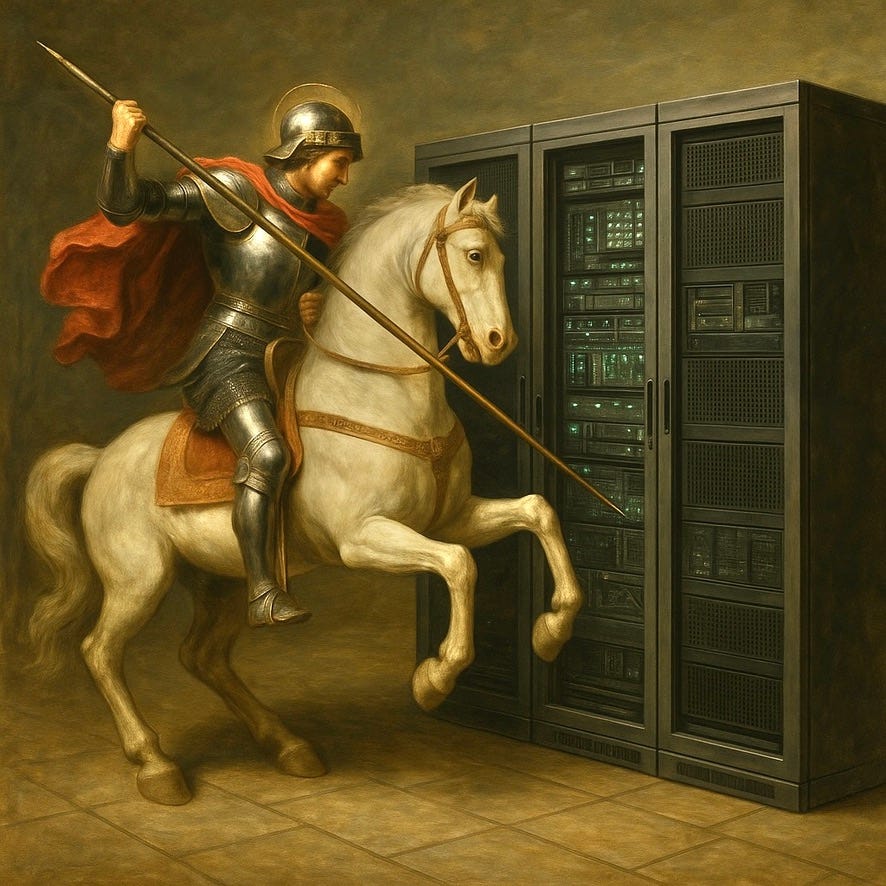
So, what is the solution to these potential problems? How shall we best tame the hi-tech “dragon” of an overly mental and mechanical existence in these times?
It doesn’t necessarily mean completely renouncing AI and all of our technological conveniences, so much as taking care not to let these tools completely dominate and control our lives. That may simply mean reducing our reliance on machines or our time spent on computers, cell phones, and television, and in turn spending more time in nature, engaged in creative pursuits, or in direct communion with other humans, or that matter animals. Living things, in other words.
I think we can draw another important clue from Kubrick’s 2001. How did the astronaut ultimately overcome the threat posed by AI and the computer Hal? Essentially, it was by climbing inside and deprogramming it, bit by bit—or byte by byte, as the case may be. In much the same manner, one way to deal with the potential tyranny of the hyper-rational mind is by “unplugging” it—i.e., periodically taking time to reflect, meditate, and just sit in silence. By stopping the world, the world and its enticements begin to loosen their grip, and we can begin to reconnect with the life and needs of the soul.

In that way, the otherwise fearsome “dragon” of the rational mind becomes an ally rather than an existential threat. One can then begin to solve that other great challenge posed by the emerging Great Age—namely, grasping the critical difference between knowledge and wisdom.
Ray Grasse is a writer, astrologer, and photographer living in the American Midwest. He is author of ten books including The Waking Dream, Under a Sacred Sky, and An Infinity of Gods. His websites are www.raygrasse.com and www.raygrassephotograph.com.
Fascinating analysis, Ray! Seems we may be running the risk of turning into robots ourselves. As we move from relying on the our tech machines to provide us with the our more mundane "needs" like information, communication, transport and so on, we may be on the road to unwittingly giving up our decision-making skills and intuition altogether.